
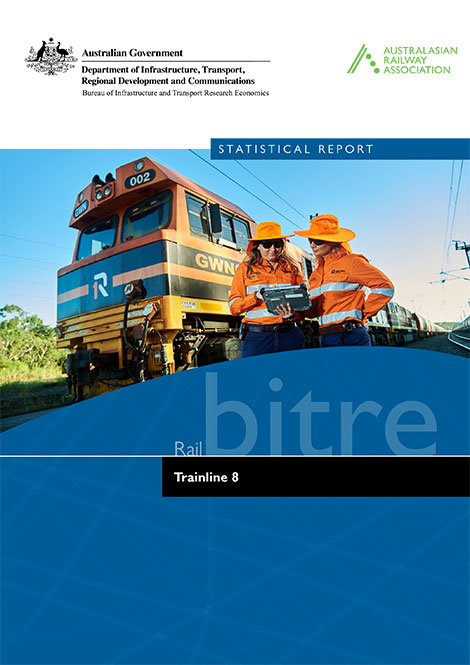
Trainline is a compendium of Australia's railways, providing insights, analysis and an understanding of the railway industry. Australia's railways are evolving via changes within and outside the industry. These changes include logistics, commodity flows, technology, urban patronage and regional passenger services. The publication presents an overview and data on railway transport tasks performed; characteristics of the railways and train operators' rolling stock that runs; and aspects of railway performance including safety, environment and reliability.
Tasmanian Freight Equalisation Scheme Monitoring Report 2020
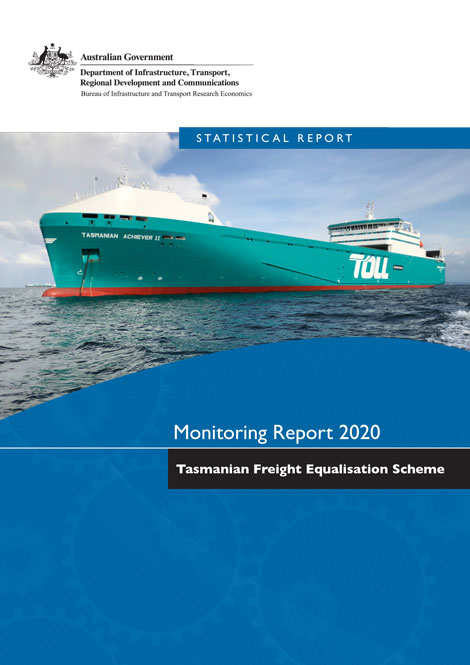
This report presents results of the first 4-yearly review of all components of the Tasmanian Freight Equalisation Scheme (TFES) as directed under Clause 10.5.2 of the TFES Ministerial Directions (Department of Infrastructure, Transport, Regional Development and Communication 2020).
Australian Infrastructure Statistics—Yearbook 2020
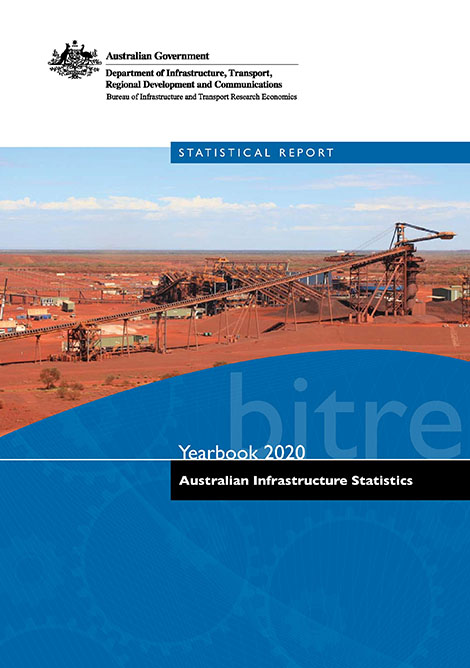
The aim of the Australian Infrastructure Statistics Yearbook is to provide a single, comprehensive annual source of infrastructure statistics for use by policymakers, industry leaders, transport analysts and the wider Australian community.
The publication is primarily a source of long-term, aggregate time series infrastructure statistics. Most statistics included in the publication are currently collected by BITRE or other Australian, state or territory government agencies.
The Yearbook is presented in five parts:
The yearbook is accompanied by the Key Australian Infrastructure Statistics Booklet which is a summary of statistics from the yearbook.
Freight Data Exchange pilot projects—Summary Report 2020
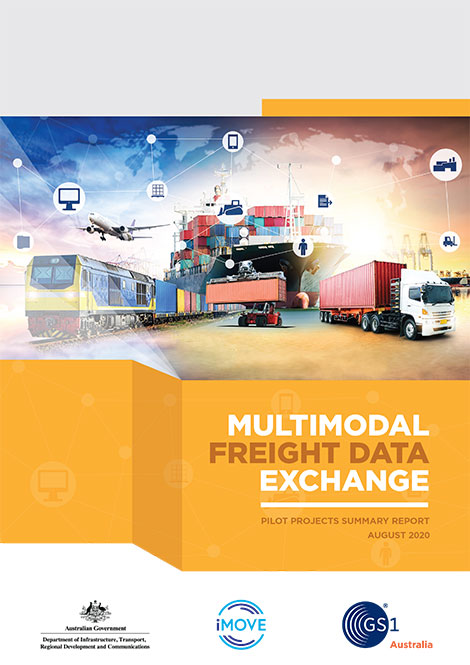
Information technology and data are increasingly essential to modern business operations. The increasing digitalisation of supply chain processes and freight consignment information offers further opportunities to increase the efficiency and productivity of Australian freight supply chains.
For industry, increasing digitalisation can improve visibility of freight consignments and interoperability between supply chain partners, and aid industry in responding to supply chain delays, bottlenecks or errors – and thereby improve overall freight industry efficiency and productivity. For governments and transport planning agencies, the increasing digitalisation of freight supply chain information can potentially provide more timely strategic-level information to help inform planning and investment, and at less cost.
In 2019-20, the Australian Government, in cooperation with iMOVE and selected industry partners, undertook an initial round of Freight Data Exchange pilot projects to investigate, develop and demonstrate the capability for supply chain partners to share freight consignment information in real time and also assess the feasibility of aggregating freight consignment event/message data to produce aggregate outputs that help inform infrastructure planning and policy priorities.
This report briefly outlines some of the key outcomes of the three projects and suggests directions for further work.
The report was produced in collaboration between BITRE and iMOVE Australia, and with the support and assistance of participating industry partners.
Freight route performance under COVID-19
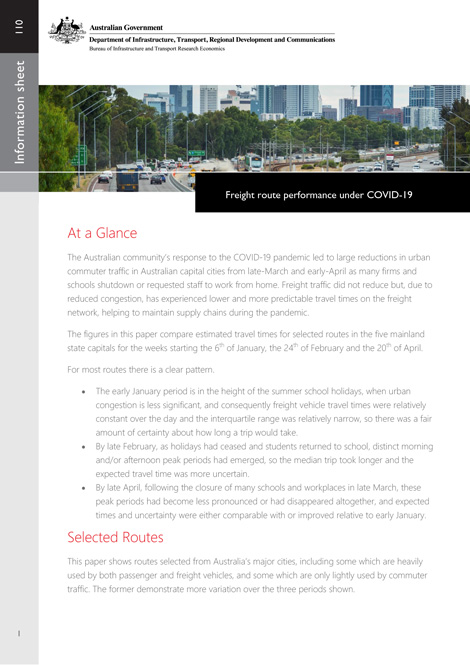
This Information Sheet provides estimates of the impact of the COVID-19 pandemic on freight vehicle travel times for selected routes in Australian major cities in early 2020. The results show that whilst there was no significant change in freight vehicle traffic volumes over that period, freight vehicles experienced shorter and more predictable travel times on many urban freight routes, primarily due to reduced commuting trips. This helped the freight industry to maintain supply chains during the initial stages of the pandemic. The data underlying the estimates is from the BITRE freight telematics program collection, which is sourcing vehicle position data from a small number of road freight operators.
- Freight route performance under COVID-19
Australian Infrastructure Statistics—Yearbook 2019
The Australian infrastructure statistics yearbook provides a comprehensive evidence base to examine long-term and emerging trends as well as inform policy development and regulatory reform in the transport, energy, water and communications sectors. It is the only comprehensive source of time series statistics for Australia's major areas of economic infrastructure. The yearbook is accompanied by the Key Australian Infrastructure Statistics Booklet which is a summary of statistics from the yearbook.
- Yearbook 2019–Australian Infrastructure Statistics
- Key Australian Infrastructure Statistics 2019
- Australian Infrastructure Statistics Yearbook 2019 Part I–Infrastructure and the Economy
ZIP: [95 KB] - Australian Infrastructure Statistics Yearbook 2019 Part T–Transport
ZIP: [1029 KB] - Australian Infrastructure Statistics Yearbook 2019 Part E–Energy
ZIP: [349 KB] - Australian Infrastructure Statistics Yearbook 2019 Part C–Communication
ZIP: [92 KB] - Australian Infrastructure Statistics Yearbook 2019 Part W–Water
ZIP: [96 KB]
Waterline reports on trends in (a) throughput, (b) container handling productivity on the waterfront and the land side of ports in Australia, and (c) the cost of importing and exporting containers via five container ports. It covers both the loading and unloading of container ships and the transport of containers from container terminals.
This issue covers port terminal activity up to the June quarter 2019.
- Container Terminal Throughput
- Container Terminal Productivity
- VBS/TAS Operations
- Port Interface Cost Index
- Time Series Tables
ZIP: 88 KB
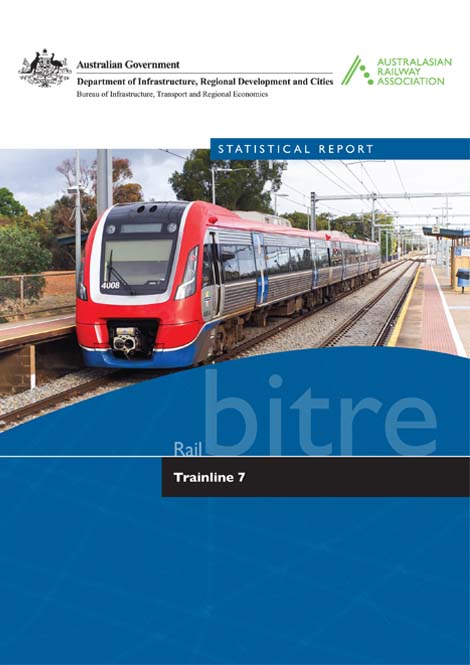
Trainline is a compendium of Australia's railways providing insights, analysis and an understanding of the railway industry. Australia's railways are evolving via changes within and outside the industry. These changes include logistics, commodity flows, technology, urban patronage and regional passenger services. The publication presents an overview and data on railway transport tasks performed; characteristics of the railways and train operators' rolling stock that runs; and aspects of railway performance including safety, environment and reliability.
Australian aggregate freight forecasts—2019 update
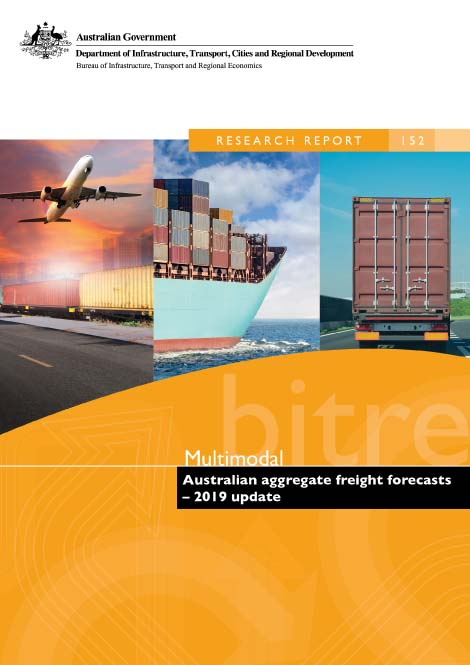
This report presents long-term forecasts of total Australian freight volumes, for road, rail, coastal shipping and aviation, between 2018 and 2040. The forecasts are based on a combination of statistical models relating historical trends in freight volumes and economic activity, informed assumptions about likely future long-term economic and demographic trends, and international assumptions about likely future world demand for key Australian export commodities. This report represents the first issue in the BITRE's revamped forecasting series, which aims to provide regularly-updated long-term forecasts of Australian freight activity, by major transport mode, at national, state, territory and regional scale.
- Australian aggregate freight forecasts—2019 update [PDF: 4389 KB]
Australian Sea Freight 2016-17
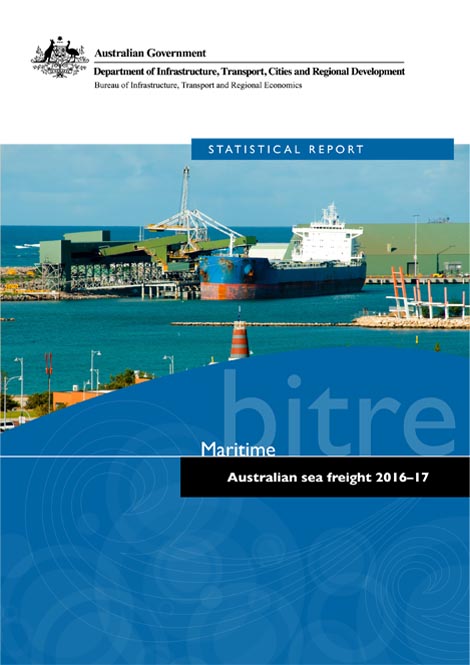
This is the latest in a series of Bureau of Infrastructure, Transport and Regional Economics (BITRE) reports that provide information on Australian sea freight movements, vessel activity, the use of coastal trading licences, and the size and composition of the Australian trading fleet. This report contains statistics on maritime freight and shipping activities in Australia from 2007–08 to 2016–17.