
Impacts of closing the Digital Divide for First Nations Australians

Digital inclusion refers to equitable access to digital opportunities and reflects the extent to which people can engage with these opportunities. This report outlines analysis of the potential impacts of improving digital inclusion, with a focus on First Nations Australians.
The analysis finds that improving digital inclusion through closing the digital divide could support better access to jobs, education, health services and information. It could also help people save time and improve economic, social and wellbeing outcomes. These benefits depend on people having safe and reliable connections, as well as the skills and confidence to use digital technologies.
The analysis also identifies risks that need to be managed, including cyber security threats, scams, misinformation and online harms such as cyber-racism. If not addressed, these risks can affect social and emotional wellbeing.
This analysis was developed in consultation with the First Nations Digital Inclusion Advisory Group.
Road and rail supply chain resilience review
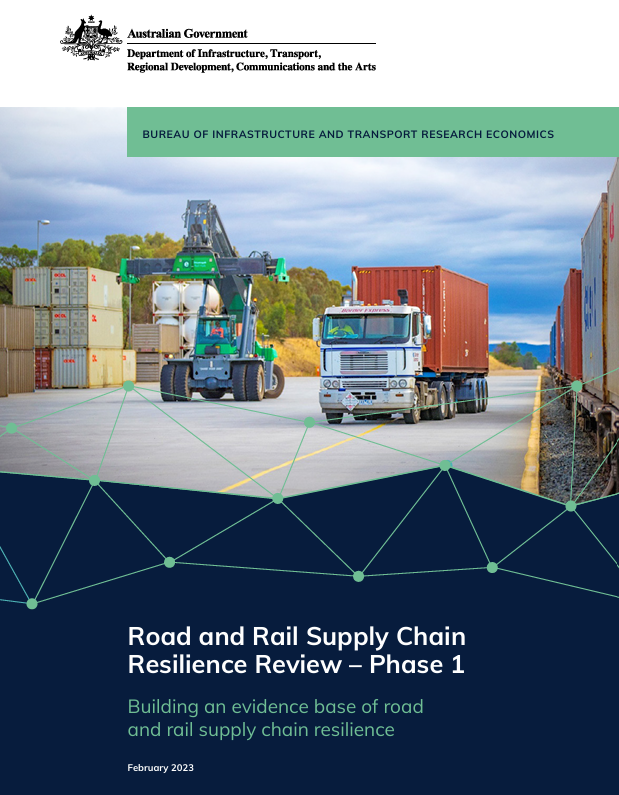
BITRE is leading a review into the resilience of Australian road and rail supply chains.
This review will identify the supply chains that are most critical to Australian communities and businesses, the risks they face, and a stocktake of any work underway to mitigate risks. This work will help to inform action by government on how to effectively and efficiently mitigate risks in supply chains for the benefit of all Australians.
The Terms of Reference for the review are presented below.
Phase One of the review was released on 6 February 2023.
Enquiries about the review can be addressed to: RoadandRailResilience@infrastructure.gov.au
All media enquiries should be addressed to: media@infrastructure.gov.au
Road and rail supply chain resilience review – terms of reference
All Australians depend on strong and resilient supply chains. The impacts of COVID-19, natural disasters and a growing freight task have shown the increasing importance of Australian on-land supply chains, and their critical importance to the national economy, and the lives and livelihoods of Australians. Understanding which supply chains are of national importance, the risks they face, and how government and industry can work to mitigate these risks is essential to ensure supply chains remain resilient and fit-for-purpose now and in the future.
In March 2022, the Department of Infrastructure, Transport, Regional Development, Communications and the Arts was asked to conduct a review into Australia’s road and rail supply chain resilience, supported by independent advice as required.
The review will:
- Define and determine key risks to critical supply routes – routes that transport large quantities of freight or are critical to supply of essential goods or services across Australia;
- Identify key risks to critical supply routes in the short, medium and long term — including weather events or natural disasters, limited alternative routes, and limited and difficult to access alternative transport modes;
- Assess the potential vulnerabilities in critical supply routes;
- Complete a stocktake of recent relevant work by government and industry intended to identify and mitigate Australian domestic road and rail supply chain risks;
- Identify data generation, capture and use requirements necessary to assess, inform best‑practice and improve road and rail supply chain resilience;
- Determine the critical routes at highest risk of failure; and
- Develop and present pragmatic options for governments to mitigate or address risks to critical road and rail supply chains, in alignment with the Government-agreed framework to identify and mitigate critical supply chain risks.
The focus of the review is on Australia’s road and rail infrastructure and linked infrastructure. Matters such as international supply chain vulnerability, costs of freight, the transport workforce and critical inputs to the transport sector are outside the scope of the review.
The review will take into consideration supporting work, including but not limited to the:
- Australian Infrastructure Plan;
- National Freight and Supply Chain Strategy, including the National Freight Data Hub;
- National Urban Freight Planning Principles;
- Final Report of the Royal Commission into National Natural Disaster Arrangements;
- Final Report of the Productivity Commission Study into Vulnerable Supply Chains;
- National Rail Action Plan;
- Supply Chain Resilience Initiative; and
- DITRDC’s Key Freight Routes Map.
The review will engage closely with the Freight Industry Reference Panel, and also consult with:
- Key infrastructure owners and operators;
- Freight industry stakeholders – including freight customers;
- State and territory governments;
- National Recovery and Resilience Agency (NRRA);
- Infrastructure Australia;
- CSIRO;
- The Department of the Prime Minister and Cabinet, including the Office of Supply Chain Resilience;
- The Department of Home Affairs (including Emergency Management Australia and the National Coordination Mechanism);
- The Department of Agriculture, Water and the Environment, including the Australian Climate Service; and
- Any other groups DITRDC deems necessary.
Phase 1 – Building the evidence base
This report presents the Bureau of Infrastructure and Transport Research Economics’ (BITRE) findings for the first six components of the Terms of Reference based on an initial assessment of Australia’s road and rail supply chain resilience.
The evidence in this report draws on a literature review, extensive stakeholder consultation and geospatial analysis, including scenario modelling. Scenario modelling provides greater insight into a number of key critical and vulnerable routes, including an assessment of the likelihood and expected impact of various hazards on road and rail supply chains. The Review also presents a number of case studies to provide real-world illustrations of the impact of natural and human induced risks, as well as examples of initiatives to address supply chain issues.
Supplementary materials
- Appendix B – Resilience analysis of key freight roads and railways using CSIRO’s TraNSIT
- Appendix C – Analysis of risks impacting the resilience of supply chains
- Appendix F – Summary of risks and impacts on critical KFRs
- Appendix G – Stocktake of current or recently completed resilience initiatives across government
Telecommunications affordability and access for First Nations households
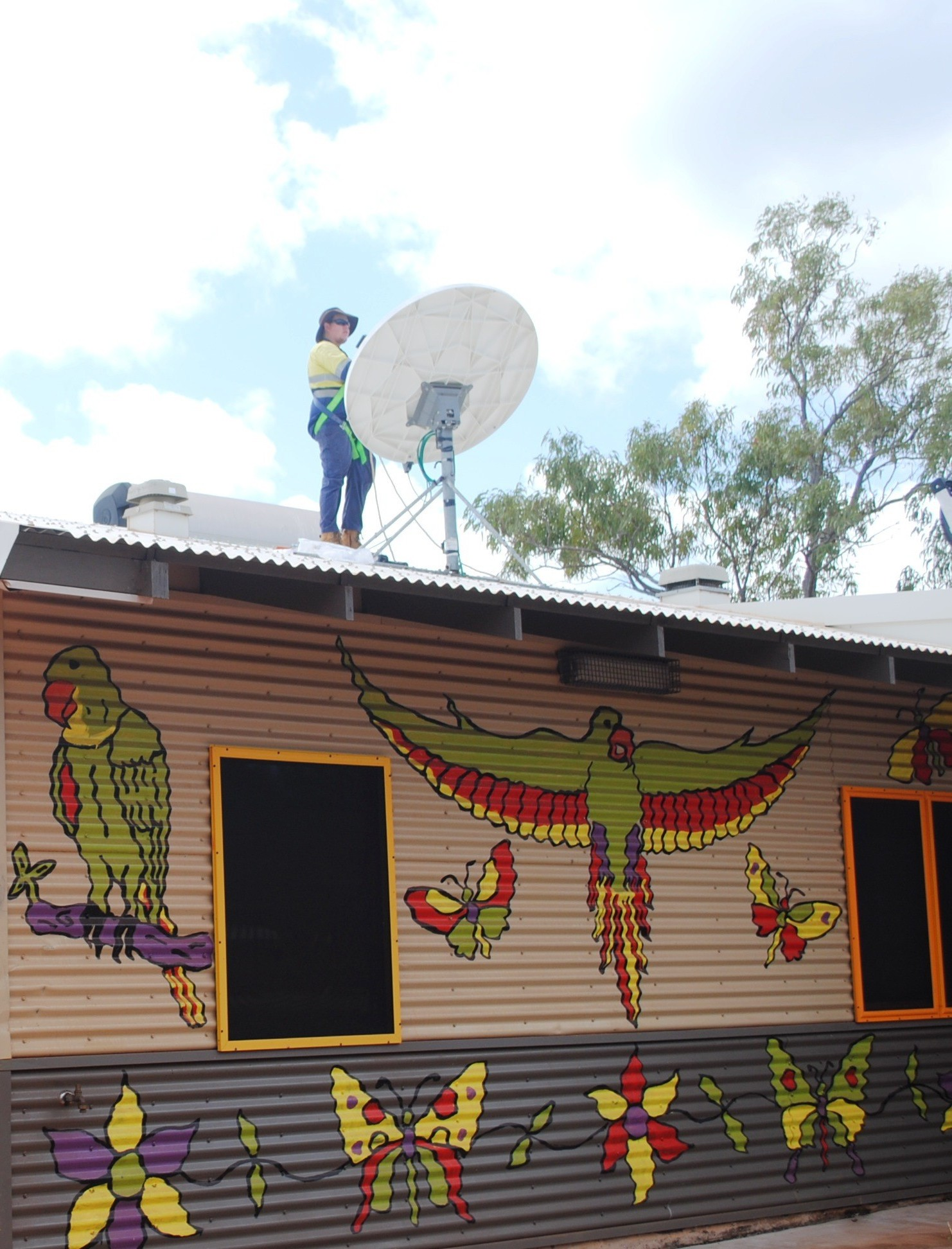
Digital technologies are transforming how we interact as a community and how businesses and governments operate. Communications services are essential for everyday living and a primary means of accessing information, employment, markets and key services. Affordable communications services are critical for digital inclusion but assessing what is 'affordable' is complex due to diversity of Australian experiences and wants.
This is the fourth report in a series of papers creating measure that monitor and report on the affordability of communications services. This report is an extension of the third working paper and analyses trends in telecommunications affordability and access for First Nations households.
Looking to the future, strong consumer demand for telecommunications services is anticipated to continue. The outlook for affordability will depend on a number of factors including regulatory settings, technology developments, competitive pressures and broader income growth.
Australian households and the affordability of telecommunications

Digital technologies are transforming how we interact as communities and how businesses and governments operate. Communications services are essential for everyday living and are a primary means of accessing information, employment, markets and key services. Affordable communications services are critical for digital inclusion but assessing affordability is complex due to the diversity of Australian experiences, needs and wants.
This is the third of 4 reports in a series of papers creating measures to monitor and report on the affordability of communications services. This report uses econometric modelling to identify the demographic and socioeconomic factors impacting household spending on telecommunications services and their risk of potential digital exclusion.
Strong consumer demand for telecommunications services is anticipated to continue. The outlook for affordability will depend on a number of factors including regulatory settings, technology developments, competitive pressures and broader income growth.
Affordability of communications services for low-income households

Digital technologies are transforming how we interact as communities and how businesses and governments operate. Communications services are essential for everyday living and are a primary means of accessing information, employment, markets and key services. Affordable communications services are critical for digital inclusion but assessing 'affordability is complex due to the diversity of Australian experiences, needs and wants.
This is the second of 4 reports in a series of papers creating measures to monitor and report on the affordability of communications services. This report uses updated market trends from the initial paper and data use case studies to estimate basic data needs.
Strong consumer demand for telecommunications services is anticipated to continue. The outlook for affordability will depend on factors including regulatory settings, technology developments, competitive pressures and broader income growth.

Access to quality and reliable telecommunications services has become a central part of modern life. Digital technologies are essential for everyday living and a primary means of accessing information, employment, markets and key services. For children, it is particularly important as these technologies can support their education, social connectedness and their ability to participate in an increasingly digital economy.
For some Australians, however, their lower level of digital inclusion means that they are less able to enjoy the benefits of being online. This includes First Nations people and communities, older Australians, and low-income households.
The report below is the third in the series on access to telecommunication services and uses HILDA data to gain insights into the socioeconomic characteristics of Australians without access to the internet.
With the continued transition of services and opportunities online, supporting digital inclusion will continue to be a critical part of ensuring all Australians can access those benefits, particularly people living in regional and remote areas.
Revision note (June 2026)
This report has been revised following publication to improve the specification of the econometric models and the clarity of interpretation.
The key changes are:
- Household income is now expressed in logarithmic form in both models to improve consistency and interpretability.
- Interaction terms have been removed from the logistic regression model to simplify the specification.
- The interpretation of marginal effects has been clarified to more accurately reflect model outputs.
- Explanations of hazard rates, odds ratios and Kaplan-Meier survival curves have been revised for greater precision.
These revisions improve the robustness and interpretability of the analysis. The overall findings and policy insights remain materially unchanged.

Access to quality and reliable telecommunications services has become a central part of modern life. Digital technologies are essential for everyday living and a primary means of accessing information, employment, markets and key services. For children, it is particularly important as these technologies can support their education, social connectedness and their ability to participate in an increasingly digital economy.
For some Australians, however, lower levels of digital inclusion means that they are less able to enjoy the benefits of being online. This includes First Nations people and communities, older Australians and low-income households.
The second report of the series on access to telecommunication services uses survey data of Australian youth to understand how young peoples’ socioeconomic and demographic backgrounds impact their access to digital technology. It also explores young people’s experiences online.
Productivity impacts from broadband

This research explores the link between broadband and productivity growth at the individual business (or firm) level. It shows that there is generally a positive relationship between businesses switching from DSL to fibre/cable-based broadband and improvements to their productivity. This relationship is strongest in the year immediately after switching to high-speed broadband. More generally, the study finds that high speed broadband tends to have a positive relationship with productivity growth.
Analysis of Low Earth Orbit (LEO) satellites: implications for Australia’s agriculture and mining sectors

Recent analysis has explored the potential economic impacts of increased connectivity from LEO satellites for the agriculture and mining sectors.
LEO satellites are an emerging technology that will provide faster and more reliable communications for users outside of fixed and mobile broadband coverage, particularly those in remote and rural areas, promoting a range of economic and social benefits.
The report shows that Australia is an attractive market for LEO satellites.
Australia’s agriculture and mining sectors have significant presence in regional areas and could leverage increased connectivity from LEO satellites for the increased adoption of Internet of Things (IoT) and other digital technologies. The increased use of these technologies could provide these sectors with improved productivity in their operations as well as health and environmental benefits.
Cultural and creative workforce

Australia's cultural and creative workforce refers to those employed in a cultural and creative industry or occupation. The Bureau of Communications, Arts and Regional Research (BCARR) has undertaken a detailed analysis of cultural and creative employment in Australia.
This is an interim report which provides preliminary workforce estimates while Australia moves to a new occupational classification framework. A final report is expected to be released in 2027–28, following the publication of 2026 Census data and labour market statistics which incorporate updated occupational classifications.
Key interim findings
Interim findings show that the cultural and creative sector is a significant and resilient part of Australia's economy.
- In 2023–24, over 591,000 people were employed in this sector as their main job—comparable to major industries like transport, postal and warehousing and wholesale trade—with nearly 50,000 secondary jobs highlighting the flexible, multi-job nature of the workforce.
- Employment has grown by 33% since 2008–09, driven by architecture services, events (arts), and advertising and promotion, with most domains rebounding strongly post-COVID.
While concentrated in New South Wales and Victoria, cultural and creative employment contributes across all states and territories, and draws from a diversity of cohorts, with women making up 56% of the workforce and First Nations employment increasing by more than 80% since 2008–09.