
Cultural and creative workforce

Australia's cultural and creative workforce refers to those employed in a cultural and creative industry or occupation. The Bureau of Communications, Arts and Regional Research (BCARR) has undertaken a detailed analysis of cultural and creative employment in Australia.
This is an interim report which provides preliminary workforce estimates while Australia moves to a new occupational classification framework. A final report is expected to be released in 2027–28, following the publication of 2026 Census data and labour market statistics which incorporate updated occupational classifications.
Key interim findings
Interim findings show that the cultural and creative sector is a significant and resilient part of Australia's economy.
- In 2023–24, over 591,000 people were employed in this sector as their main job—comparable to major industries like transport, postal and warehousing and wholesale trade—with nearly 50,000 secondary jobs highlighting the flexible, multi-job nature of the workforce.
- Employment has grown by 33% since 2008–09, driven by architecture services, events (arts), and advertising and promotion, with most domains rebounding strongly post-COVID.
While concentrated in New South Wales and Victoria, cultural and creative employment contributes across all states and territories, and draws from a diversity of cohorts, with women making up 56% of the workforce and First Nations employment increasing by more than 80% since 2008–09.
Creative skills for the future economy
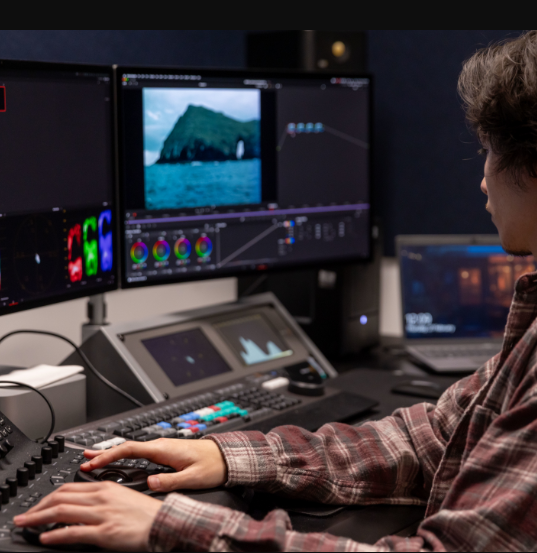
The research paper Creative skills for the future economy analyses the skills and qualifications of people working in creative fields and how these may be used in the future.
Australia’s live music sector: an occupation-based analysis

Live music is an important part of Australia’s social and cultural fabric, but there is limited information about the sector’s size and composition. This research seeks to estimate the number of workers in the live music ecosystem and their characteristics.
In the analysis, the Bureau of Communications, Arts and Regional Research (BCARR) considers all occupations required to put on a live music event. This includes primary workers, which are essential to live music (for example, musicians, technicians), supporting workers, where only a portion of their job function may involve live music (for example, ticketing, security, music teachers) and auxiliary workers, whose job indirectly supports live music (for example, hospitality staff).
Key findings
The live music sector employed 41,000 workers in 2019-20, an increase of 5,000 workers from 2015-16. This includes workers across the whole live music ecosystem, including 14,200 primary workers, 10,000 supporting workers and 16,800 auxiliary workers.
COVID-19 was highly disruptive for the live music sector. The report acknowledges the impact that the pandemic had on performances, attendance and ticket revenue.