
Tasmanian Freight Equalisation Scheme Monitoring Report 2024
The Tasmanian Freight Equalisation Scheme (TFES) provides financial assistance for costs incurred by shippers of eligible non-bulk goods moved by sea across Bass Strait. This report is BITRE's second 4-yearly monitoring review of all components of the TFES. The focus is the volume and value of eligible claims for goods shipped between Tasmania and the mainland in the 4 years from 2019–20 to 2022–23.
Australian Infrastructure and Transport Statistics—Yearbook 2024
The aim of the Australian Infrastructure Statistics and Transport Yearbook is to provide a single, comprehensive annual source of infrastructure statistics for use by policymakers, industry, transport analysts and the wider Australian community. You can download the PDF or data files:
- Australian Infrastructure and Transport Statistics—Yearbook 2024 (PDF 9.2 MB)
- Australian Infrastructure and Transport Statistics—Yearbook 2024 data (ZIP: 2 MB)
For a summary of each chapter select from the list below:
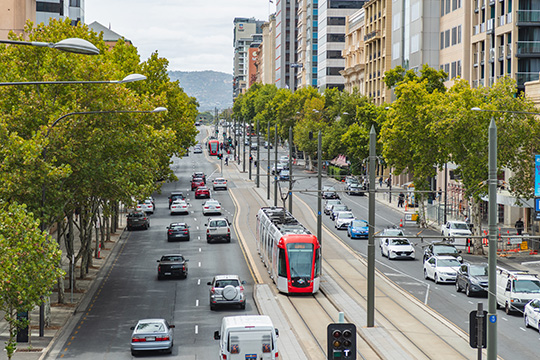
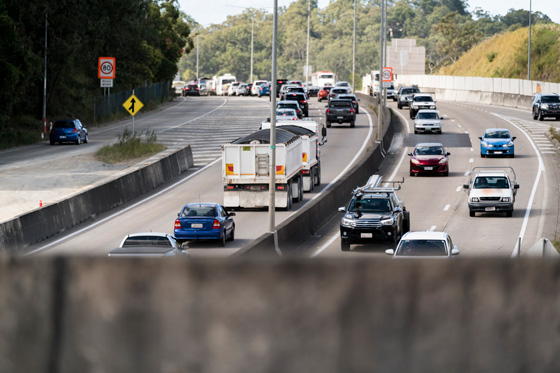
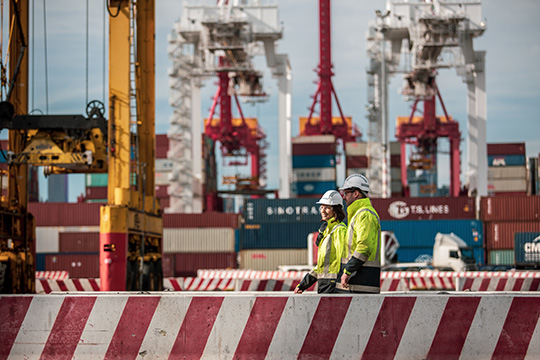

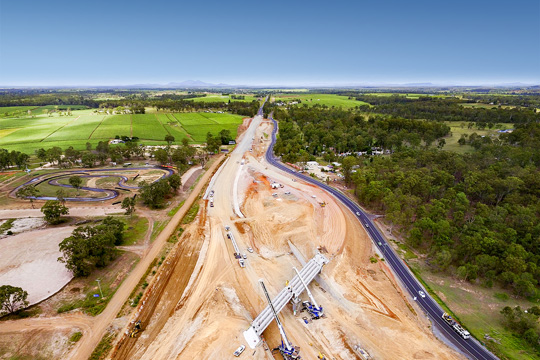
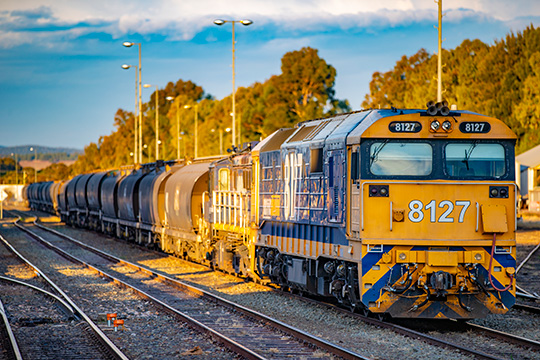

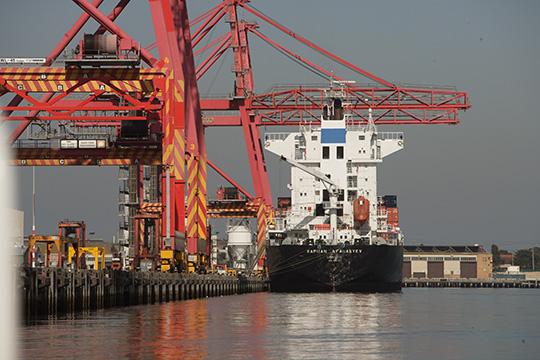

Waterline reports on trends in throughput, container handling productivity on the waterfront and landside of ports in Australia and the cost of importing and exporting containers via 5 major container ports. It covers the loading and unloading of container ships and the transport of containers from container terminals.
This issue covers port terminal activity up to the June quarter 2023.
Consultation Draft Tasmanian Freight Equalisation Scheme Monitoring Report 2024
Consultation Draft Tasmanian Freight Equalisation Scheme Monitoring Report 2024.
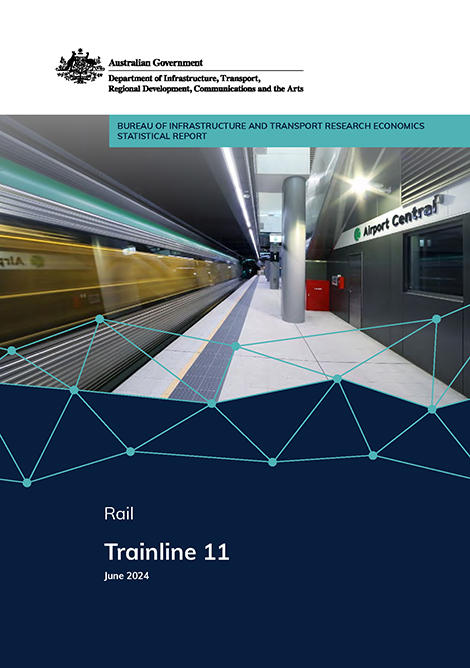
Trainline is a compendium of Australia's railways, providing insights, analysis and an understanding of the railway industry. Australia's railways are evolving, with changes within and outside the industry. These changes include logistics, commodity flows, technology, urban patronage and regional passenger services. The publication presents an overview and data on railway transport tasks performed; characteristics of the railways and train operators' rolling stock that runs; and aspects of railway performance including safety, environment and reliability.
Trainline 11 gives an overview of freight, urban and non-urban passenger rail. The report analyses traffic levels, the provision of infrastructure and rolling stock, and railway performance. It is the eleventh in the publication series.
Freight vehicle congestion in Australian capital cities – 2023
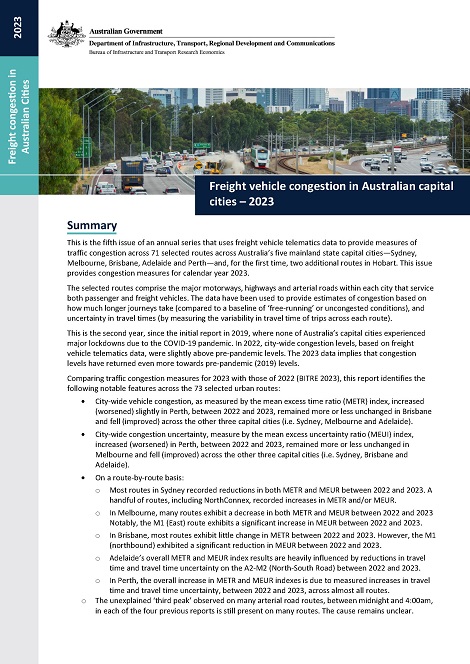
This publication is the fifth in an annual series that uses vehicle telematics data to provide measures of traffic congestion for freight vehicles on selected routes across Australia’s five mainland state capital cities – Sydney, Melbourne, Brisbane, Adelaide and Perth – and, for the first time, two additional routes in Hobart. The selected routes comprise the major motorways, highways and arterial roads within each city that service both passenger and freight vehicles. This release includes congestion measures for 73 separate routes. The estimates presented in this report cover calendar year 2023.
This is the second year, since the initial report in 2019, where none of Australia’s capital cities experienced major lockdowns as part of the COVID-19 pandemic, and city-wide congestion levels have more or less returned to pre-pandemic levels. City-wide freight vehicle congestion, as measured by the mean excess travel time index, increased (worsened) slightly in Perth, remained more or less unchanged in Brisbane, and declined (improved) in the Sydney, Melbourne and Adelaide between 2022 and 2023. Copies of the summary measure data displayed in the report are also available here.
Australian aviation forecasts—2024 to 2050
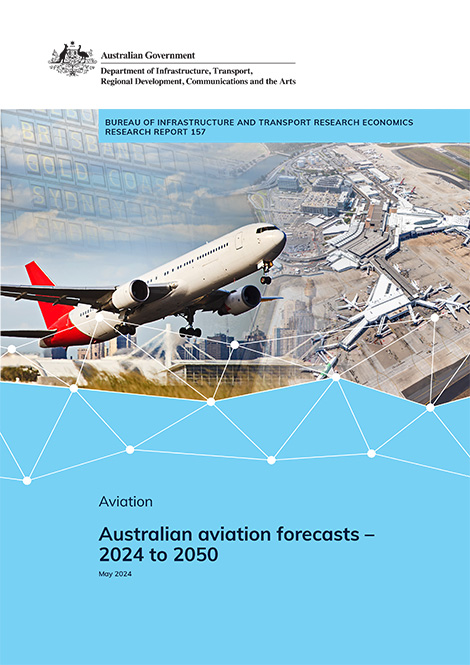
Aviation plays a key role in Australia’s transport system, providing regular scheduled services between Australia's highly dispersed major population centres and vital connectivity for rural and remote communities. As a large island nation, located significant distances from our nearest neighbours, aviation is also the primary means of access for international visitors and for domestic residents travelling overseas.
This report presents long-term forecasts of Australian commercial air passenger and freight activity and forecasts of air passenger numbers through Australia’s 14 busiest airports / air catchments – i.e. Australia’s 8 capital cities and 6 busiest non-capital city airports – and air freight volumes through Australia’s mainland state capital city airports. The forecasts are based on econometric models of Australian domestic and international air passenger and air freight demand and the most recent long-term economic outlooks for Australia and developed and major developing countries. The forecasts are intended to help inform long-term Australian aviation policy development and planning.
Australian Infrastructure and Transport Statistics—Yearbook 2023
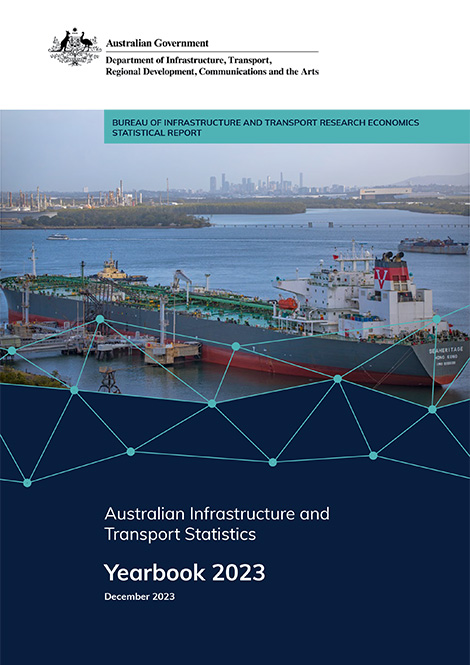
The aim of the Australian Infrastructure Statistics and Transport Yearbook is to provide a single, comprehensive annual source of infrastructure statistics for use by policymakers, industry leaders, transport analysts and the wider Australian community. Download the PDF or select a chapter below. Data files for each chapter are at the bottom of the page.
Australian Infrastructure and Transport Statistics—Yearbook 2023 - PDF (7.23 MB)
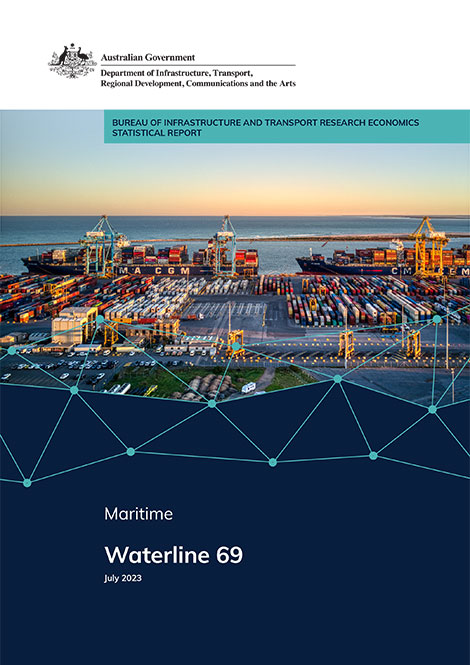
Waterline reports on trends in throughput, container handling productivity on waterfront and landside of ports in Australia and the cost of importing and exporting containers via 5 container ports. It covers the loading and unloading of container ships and the transport of containers from container terminals.
This issue covers port terminal activity up to the June quarter 2022.
Road Vehicles Australia, January 2023 (Re-issue)
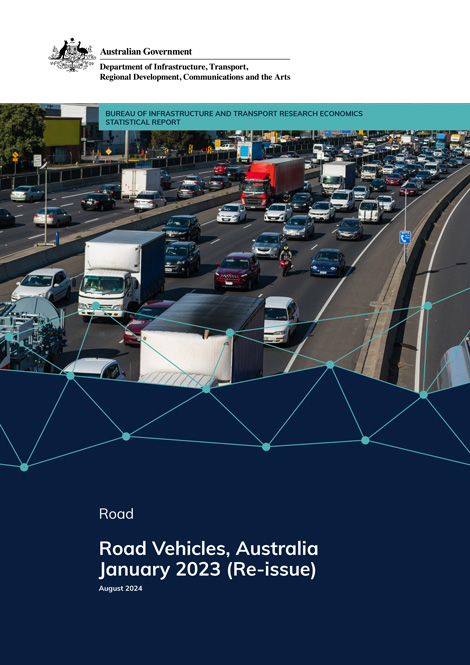
This release provides statistics relating to the number of vehicles registered for road use in Australia on 31st January 2023. The statistics encompass all vehicles that were registered with an Australian state or territory motor vehicle registry for unrestricted use on public roads, and reported by jurisdictions to the National Exchange of Vehicle and Driver Information System (NEVDIS). This is the second annual release of Road Vehicles Australia, which replaces the ABS Motor Vehicle Census, discontinued in 2021. More statistics are available on the BITRE website and data.gov.au.