
Australian Infrastructure Statistics—Yearbook 2020
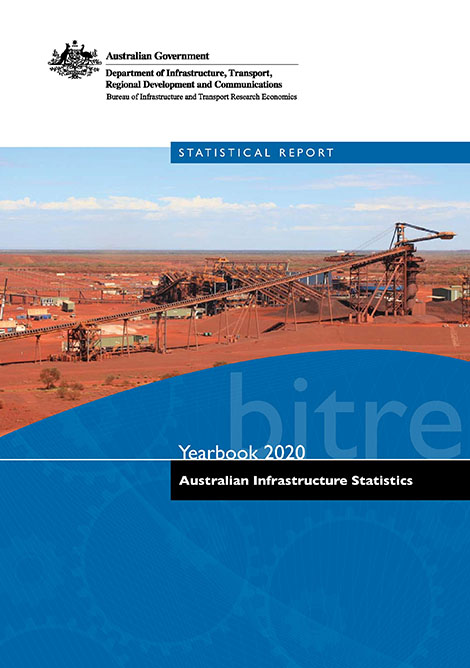
The aim of the Australian Infrastructure Statistics Yearbook is to provide a single, comprehensive annual source of infrastructure statistics for use by policymakers, industry leaders, transport analysts and the wider Australian community.
The publication is primarily a source of long-term, aggregate time series infrastructure statistics. Most statistics included in the publication are currently collected by BITRE or other Australian, state or territory government agencies.
The Yearbook is presented in 5 parts:
The yearbook is accompanied by the Key Australian Infrastructure Statistics Booklet which is a summary of statistics from the yearbook.
Impact of COVID-19 on petrol prices in Australia
Australian retail petrol prices are primarily determined by international world oil prices and overseas refined petroleum prices, and variations in exchange rates. As a result of COVID-19 restrictions imposed around the wold, demand for crude oil and refined petroleum products decreased significantly from mid-March 2020 onwards, and led to sharp decreases in crude oil and refined product prices.
The analysis presented in this paper outlines the principal components of Australian retail petrol prices, the impact of COVID-19 on weekly petrol prices and also the typically observed time lag between international refined petroleum product prices and domestic retail petrol prices.
Freight route performance under COVID-19
This Information Sheet provides estimates of the impact of the COVID-19 pandemic on freight vehicle travel times for selected routes in Australian major cities in early 2020. The results show that whilst there was no significant change in freight vehicle traffic volumes over that period, freight vehicles experienced shorter and more predictable travel times on many urban freight routes, primarily due to reduced commuting trips. This helped the freight industry to maintain supply chains during the initial stages of the pandemic. The data underlying the estimates is from the BITRE freight telematics program collection, which is sourcing vehicle position data from a small number of road freight operators.
Australian Infrastructure Statistics—Yearbook 2019
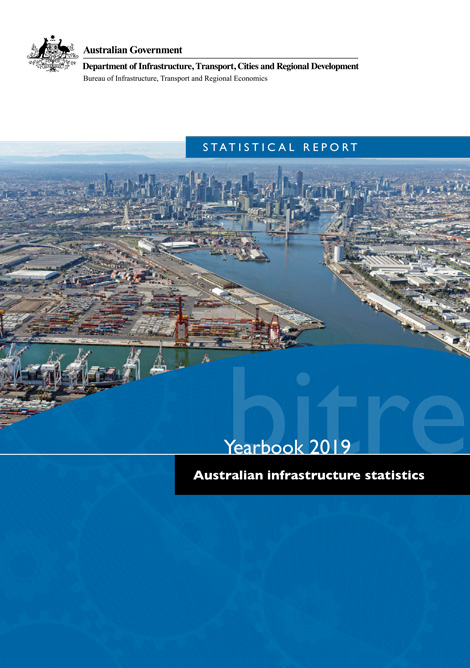
The Australian infrastructure statistics yearbook provides a comprehensive evidence base to examine long-term and emerging trends as well as inform policy development and regulatory reform in the transport, energy, water and communications sectors. It is the only comprehensive source of time series statistics for Australia's major areas of economic infrastructure. The yearbook is accompanied by the Key Australian Infrastructure Statistics Booklet which is a summary of statistics from the yearbook.
Australian aggregate freight forecasts—2019 update
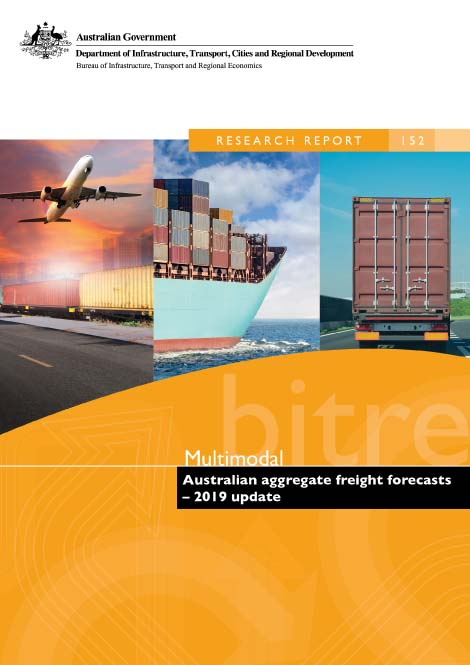
This report presents long-term forecasts of total Australian freight volumes for road, rail, coastal shipping and aviation between 2018 and 2040. The forecasts are based on a combination of statistical models relating historical trends in freight volumes and economic activity, informed assumptions about likely future long-term economic and demographic trends, and international assumptions about likely future world demand for key Australian export commodities. This report represents the first issue in BITRE's revamped forecasting series, which aims to provide regularly updated long-term forecasts of Australian freight activity by major transport mode at national, state, territory and regional scales.
BITRE summary—Economic Contribution of Transport in Australia
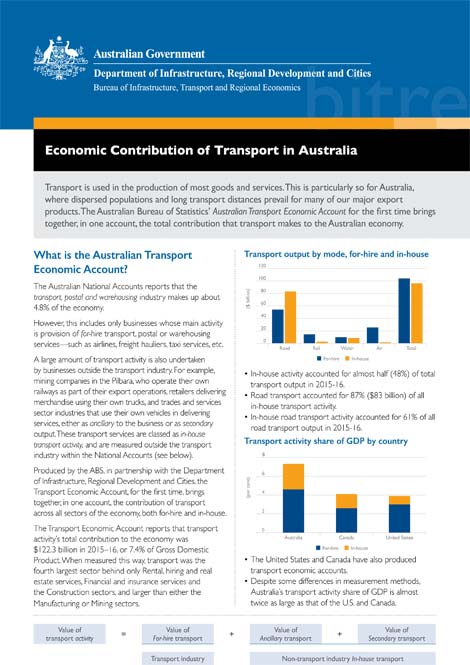
Experimental estimates of the economic contribution of all transport activity to the Australian economy.
- BITRE summary–Economic Contribution of Transport in Australia
Australian Infrastructure Statistics—Yearbook 2018
The Australian infrastructure statistics yearbook provides a comprehensive evidence base to examine long-term and emerging trends as well as inform policy development and regulatory reform in the transport, energy, water and communications sectors. It is the only comprehensive source of time series statistics for Australia's major areas of economic infrastructure. The yearbook is accompanied by the Key Australian Infrastructure Statistics Booklet which is a summary of statistics from the yearbook.
To complement the Australian Infrastructure Statistics Yearbook, BITRE has developed an Infrastructure Construction Dashboard. The Infrastructure Construction Dashboard presents quarterly updates on transport, communications, energy and water infrastructure construction, based on the ABS Engineering Construction Activity series.
- Yearbook 2018–Australian Infrastructure Statistics
- Key Australian Infrastructure Statistics 2018
- Australian Infrastructure Statistics Yearbook 2018 Part I–Infrastructure and the Economy

- Australian Infrastructure Statistics Yearbook 2018 Part T–Transport
- Australian Infrastructure Statistics Yearbook 2018 Part E–Energy
- Australian Infrastructure Statistics Yearbook 2018 Part C–Communication
- Australian Infrastructure Statistics Yearbook 2018 Part W–Water
Freightline 7—Australian aluminium industry freight transport
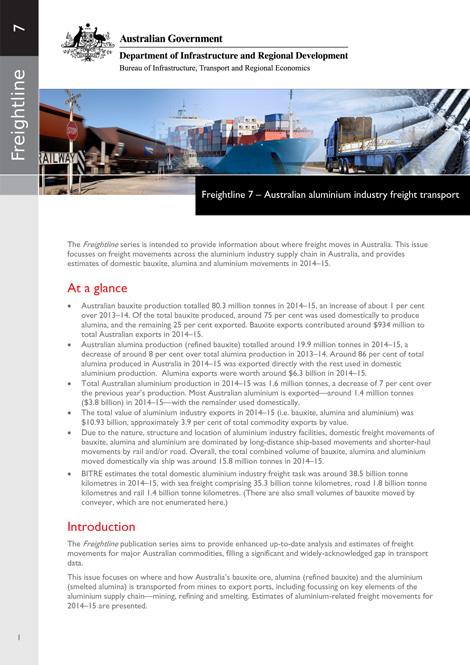
The Freightline series is intended to provide information on interregional freight movements across Australia, filling a major gap in Australian transport-related data and information, to help better inform and support policy development and infrastructure planning. Freightline 1 provides a broad overview of the freight task. Subsequent issues consider specific commodity freight tasks, and include more detailed information about the size and location of major freight movements, supply chain composition and key infrastructure components.
This issue (Freightline 7) focusses on Australian aluminium industry transport supply chains and freight movements in 2014–15.
- Freightline 7–Australian aluminium industry freight transport
Forecasting Australian Transport: A Review of Past Bureau Forecasts
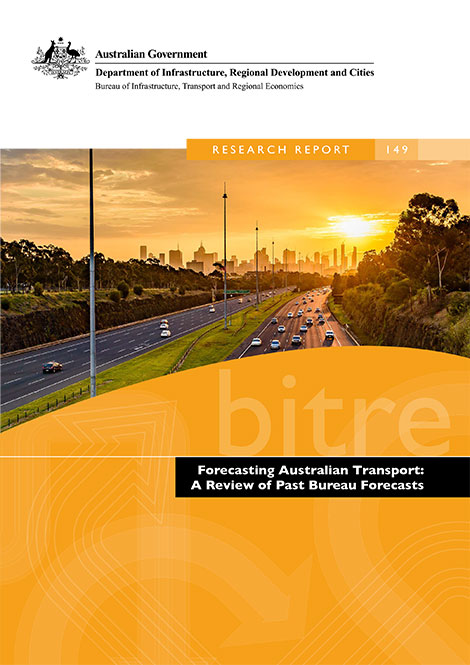
A common rational for the making of transport-related forecasts is the need to anticipate the growth of transport activity and the demand it will place on transport infrastructure. Anticipation of this demand allows for forward planning of needed improvements/additions to key parts of the networks.
As such, it is useful to examine how close past Bureau forecasts were to predicting this growth, and to learn from any obvious errors.
This is the aim of the current report.
- Forecasting Australian Transport: A Review of Past Bureau Forecasts
Freightline 6—Australian rice freight transport
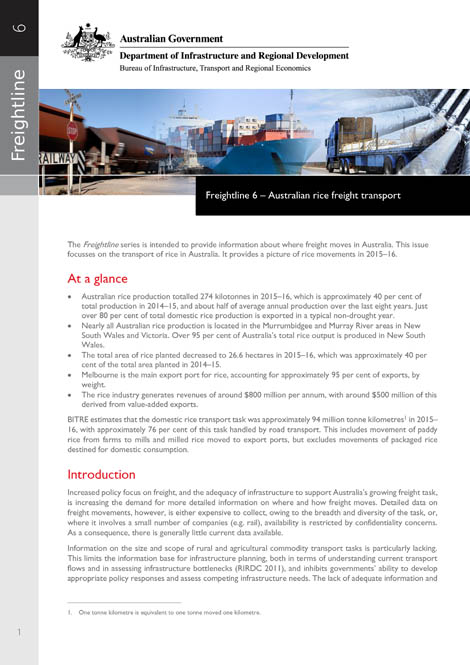
The Freightline series is intended to provide information on interregional freight movements across Australia, filling a major gap in Australian transport-related data and information, to help better inform and support policy development and infrastructure planning. Freightline 1 provides a broad overview of the freight task. Subsequent issues consider specific commodity freight tasks, and include more detailed information about the size and location of major freight movements, supply chain composition and key infrastructure components. This issue (Freightline 6) focusses on Australian rice transport supply chains and freight movements in 2015–16.
- Freightline 6–Australian rice freight transport