
The evolution of Australian towns
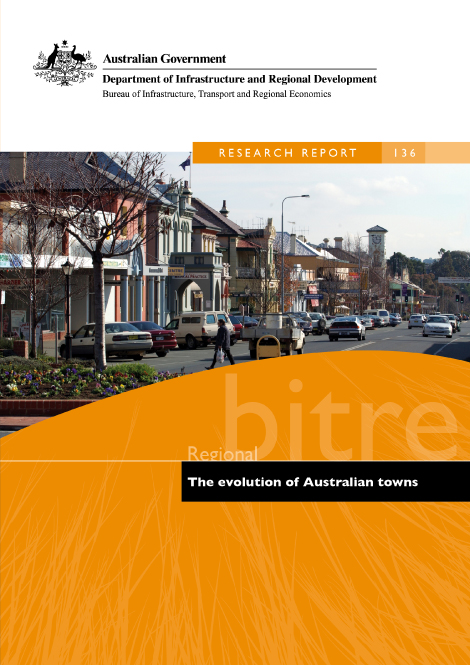
This is a historical, economic analysis of change in Australian settlement patterns over a century. Towns have been subject to significant economic, social and technological changes since 1911. This report examines how Australia's town settlement patterns reacted to that change and examines the underlying factors and processes involved. It examines the interacting effects of geography, history, goods and services markets, industry, amenity and investment. The analysis reveals the important roles of competition, existing infrastructure, improved technology, longer life expectancy and increased wealth. It concludes that a stronger focus on amenity and services are likely potential success factors for modern towns.
- The evolution of Australian towns–full report
- Preliminaries
- Executive Summary
- Chapter 1
- Chapter 2
- Chapter 3
- Chapter 4
- Chapter 5
- Chapter 6
- Chapter 7
- Chapter 8
- Chapter 9
- Chapter 10
- Chapter 11
- Chapter 12
- Appendix A
- Appendix B
- Appendix C
- Appendix D
- Appendix E
- Abbreviations and references
Road safety: modelling a global phenomenon
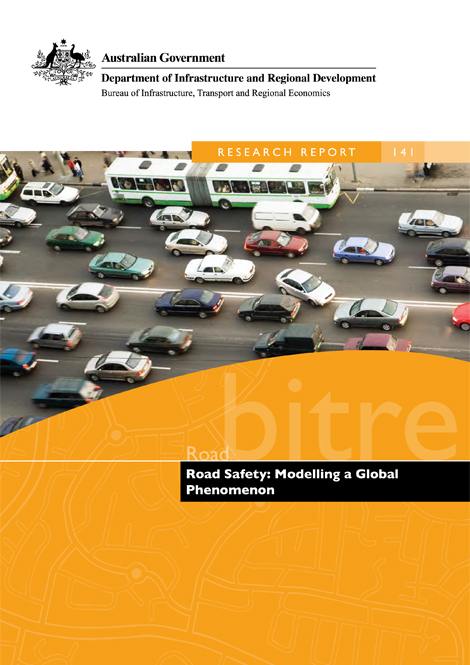
This report provides an overview of the different patterns of road fatality and injury rates in 21 countries, and their determinants.
The main result of the study are models of road fatality rates as a function of seat belt wearing rates, enforcement activities regarding speed (using speed cameras) and alcohol (with random breath testing), and economic influences (principally unemployment). Experience from around the world also shows that laws lowering speed limits and legal blood alcohol limits are effective in saving lives.
- Road safety: modelling a global phenomenon
Population growth, jobs growth and commuting flows—a comparison of Australia's four largest cities
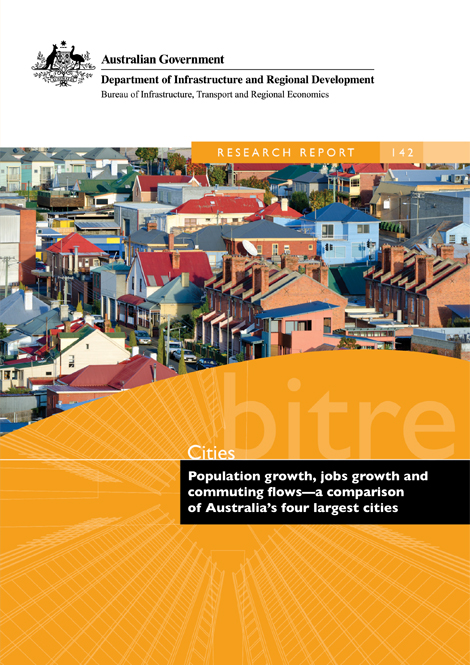
This is the first comparative study of spatial changes in population, jobs and commuting patterns within Australia's largest cities. It focuses on recent patterns of change in Sydney, Melbourne, Brisbane and Perth, while also presenting an overview of change in other capital cities and regional cities between 2001 and 2011. The report identifies some common trends and differences across the cities, and investigates the extent to which these recent spatial changes match up to the stated strategic planning goals for the four largest cities.
- Population growth, jobs growth and commuting flows–a comparison of Australia's four largest cities
The report provides a profile of Australia's principal bulk ports and the logistics chain that delivers commodities through those ports. Efficient logistics are essential for these volumes, requiring substantial investment as well as good co-ordination of the different links in the logistics chain. These factors have been especially important in the last decade, with tonnage rising by over 75%. The report illustrates the tasks performed at each port using the broad range of data and indicators that are published by port authorities and bulk terminal operators.
Population growth, jobs growth and commuting flows in South East Queensland
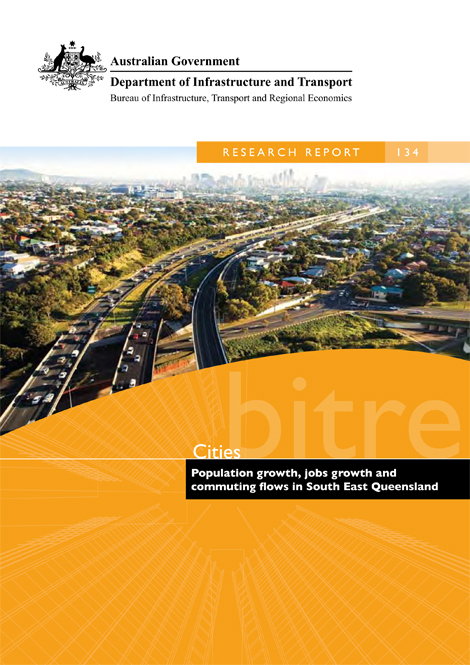
The South East Queensland report discusses changes in the geography of population and employment and the impacts on commuting, with a view to providing a solid evidence base about the trends that have been shaping the region in recent years. The analysis focuses on changes between 2001 and 2011 (wherever data is available). Further, it explores changes at a range of geographical scales to convey an understanding of the overarching patterns as well as some of the finer details. It also investigates the trends in relation to the relevant strategic planning goals.
- Population growth, jobs growth and commuting flows in South East Queensland
Public transport use in Australia's capital cities, Modelling and forecasting
This report allows understanding on forecasting of city passenger travel by motor vehicles and urban public transport. It will aid planning and policy development regarding urban public transport and motor vehicle traffic in cities.
- Public transport use in Australia's capital cities, Modelling and forecasting
Air Passenger Movements Through Capital and Non-Capital City Airports to 2030–31
This report presents forecasts of air passenger movements through Australia's eight capital city airports and five largest non-capital city airports (Newcastle, Cairns, Gold Coast, Townsville and Launceston). The forecasts have been developed using econometric models of domestic and international air passenger travel demand, and incorporating the most recent economic outlook for Australia and its major trading partners. Population, income, airfares, exchange rates and the prices of domestic and overseas travel and accommodation are the principal factors influencing growth in air passenger movements through Australian airports.
- Air Passenger Movements Through Capital and Non-Capital City Airports to 2030–31
Population growth, jobs growth and commuting flows in Sydney
The Sydney report discusses changes in the geography of population and employment and the impacts on commuting. It also investigates the trends in relation to the relevant strategic planning goals. The analysis focuses on changes between 2001 and 2010 (wherever data is available). It explores changes at a range of geographical scales to convey an understanding of the overarching patterns as well as some of the finer details.
- Population growth, jobs growth and commuting flows in Sydney
Understanding Australia's urban railways
Understanding Australia's Urban Railways provides an overview of the urban passenger and freight railways in Sydney, Melbourne, Brisbane, Perth and Adelaide. For passenger rail, the report explores service provision; patronage trends; recent and planned network expansion; and the key challenges facing each system. In addition, the report examines the main characteristics of each city's rail freight network including: the extent of the freight/passenger rail interface; recent and planned network expansion; and the principal freight task on each system.
- Understanding Australia's urban railways
Brisbane Airport: Interim Report on International Terminal
This Report represents part of a full-scale study by BTE, at the direction of the Minister for Transport, of the development requirements for Brisbane Airport. The full report will be issued at a later date and will present a detailed examination of the civil aviation requirements of the region and the appropriate expansion/replacement program.
- Brisbane Airport: Interim Report on International Terminal