
Cost of road crashes in Australia 2006
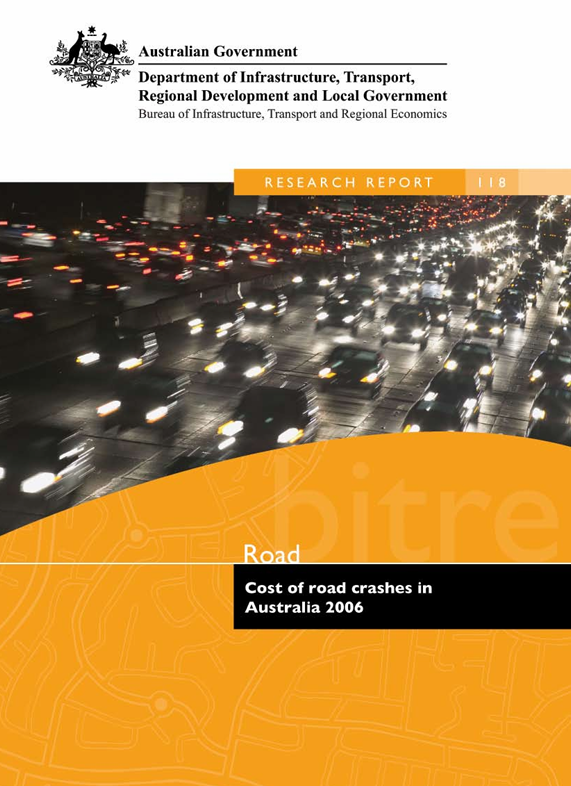
Road crashes impose large human and financial costs on society and substantial investments are made in infrastructure and safety programs to reduce road trauma. The cost of road crashes is important to the safety debate in Australia, and the unit values particularly for a fatality, injury or cost of a fatal crash are key inputs into policy development and cost-benefit analysis for safety programs and infrastructure projects. The social cost of road crashes in 2006 was an estimated $17.85 billion (1.7 per cent of GDP). This was a real decrease of 7.5 per cent compared to 1996 (2006 dollars). Estimated human losses were approximately $2.4 million per fatality, losses for a hospitalised injury were approximately $214 000 per injury (including disability-related costs), and losses for non-hospitalised injury were approximately $2200 per injury. These new estimates of the cost of road crashes update previous estimates for 1996 (Bureau of Transport Economics (BTE) Road crash costs in Australia, Report 102).
Population growth, jobs growth and commuting flows in Perth

This report identifies recent spatial changes in employment and the residential population within Perth, and investigates how commuting behaviour has responded to these changes.
- Population growth, jobs growth and commuting flows in Perth
Interstate freight in Australia

This report provides estimates and forecasts of interstate freight moving between 56 state-to-state origin-destination pairs, for example, South Australia-Queensland.
- Interstate freight in Australia
Road freight estimates and forecasts in Australia: interstate, capital cities and rest of state
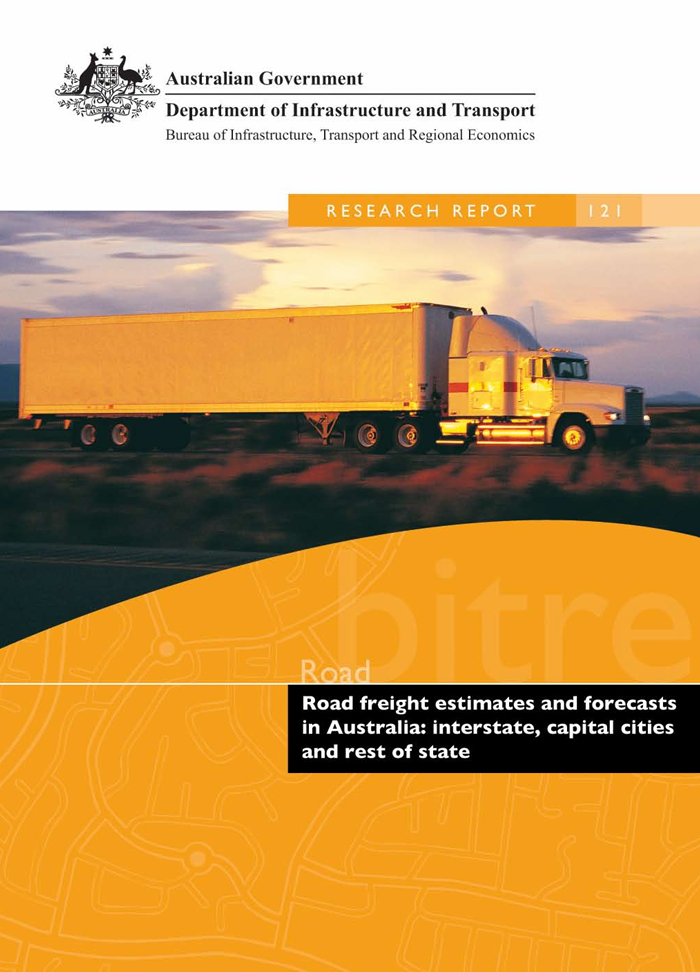
In Australia, road transport is the predominant mode for moving freight within the country, especially interstate and within capital cities. It represents a vital link in various logistics chains, providing access for freight to ports and terminals and urban freight distribution between warehouses and retail outlets. It is also the dominant mode for moving freight over relatively short distances and where alternatives are not readily available.
Truck productivity: sources, trends and future prospects
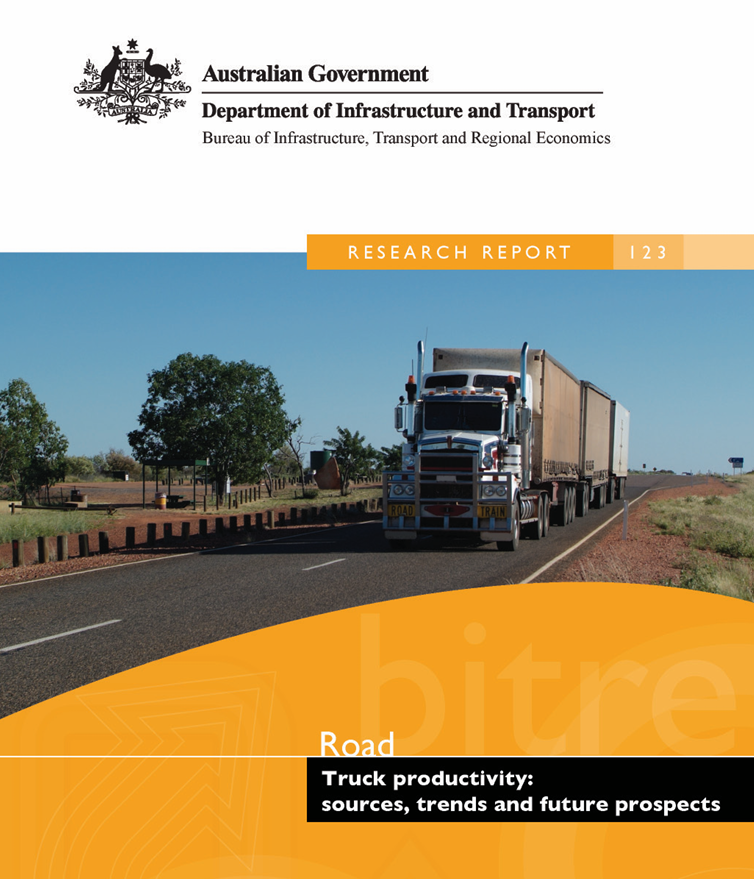
Analysis of the impact of past heavy vehicle reforms on truck productivity and projected future productivity trends.
Spatial trends in Australian population growth and movement
This report provides a summary of key trends in population growth and decline across Australia's regions, primarily between 2001 and 2009. The report highlights the role of migration in shaping Australia's settlement patterns, with a brief discussion on some of the underlying drivers.
- Spatial trends in Australian population growth and movement
Road vehicle-kilometres travelled: estimation from state and territory fuel sales
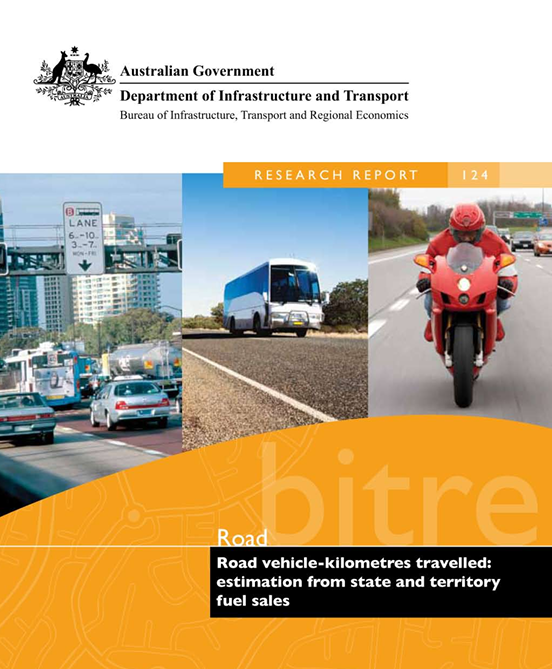
This report develops a methodology for estimating traffic levels for each of the eight states and territories in Australia from March 1965 to June 2010. This method is based on state and territory fuel sales data. Quarterly traffic on capital city roads was also estimated. The motor vehicle types used were passenger vehicles (i.e. cars), motorcycles, light commercial vehicles, rigid trucks, articulated trucks and buses, while three different types of fuel were considered, i.e. petrol, diesel and liquefied petroleum gas.
Population Growth, Jobs Growth and Commuting Flows in Melbourne

This report is the second in a series of investigations into spatial changes in population, employment and commuting in our largest cities. It explores the extent to which Melbourne's spatial development and commuting patterns have been reshaped in the direction envisaged by recent metropolitan plans.
- Population Growth, Jobs Growth and Commuting Flows in Melbourne
Road Construction Price Indexes 1969–70 to 1980–81
This Report presents input-price indexes for national road construction activity for the period 1969–70 to 1980–81.
- Road Construction Price Indexes 1969–70 to 1980–81