
Tasmanian Freight Schemes—Parameter Review 2013
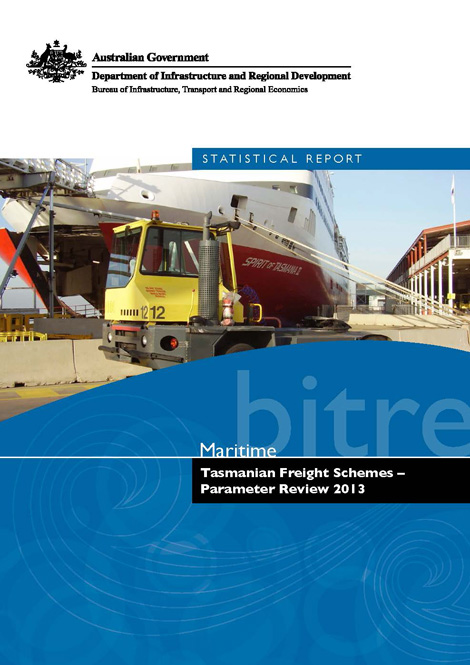
The Tasmanian Freight Equalisation Scheme operates according to Ministerial Directions (2012) using parameters recommended by the TFES Review Authority (1998). The Tasmanian Wheat Freight Scheme operates under separate Ministerial Directions approved on 25 January 2006.
Australian infrastructure statistics—Yearbook 2013 and Key Australian infrastructure statistics booklet
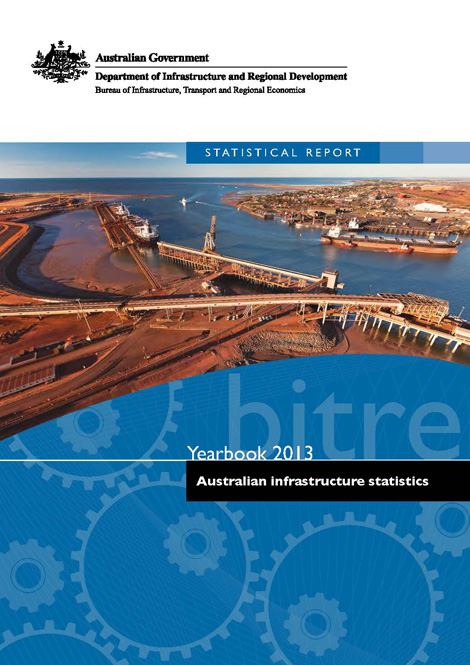
The Yearbook is an important piece of work for the Department and provides a comprehensive evidence base to examine long-term and emerging trends as well as inform policy development and regulatory reform in the transport, energy, water and communications sectors. It is the only comprehensive source of time series statistics for Australia's major areas of economic infrastructure. The Yearbook is accompanied by the first Key Australian Infrastructure Statistics booklet which is a summary of statistics from the Yearbook.
- Yearbook 2013–Australian Infrastructure Statistics
- Key Australian Infrastructure Statistics
- Australian Infrastructure Statistics
Yearbook 2013
Part 1–Infrastructure and the Economy
- Australian Infrastructure Statistics
Yearbook 2013
Part T–Transport
- Australian Infrastructure Statistics
Yearbook 2013
Part E–Energy
- Australian Infrastructure Statistics
Yearbook 2013
Part C–Communication
- Australian Infrastructure Statistics
Yearbook 2013
Part W–Water
International road safety comparisons—annual
This report presents road deaths and road death rates for Organisation for Economic Co-operation and Development (OECD) nations and Australia. The rates allow for a comparison of Australia’s road safety performance with that of other OECD nations by accounting for the differing levels of population, motorisation and distances travelled. The latest available international data is for 2023.
Fatalities per 100,000 population is the measure specified in the UN Sustainable Development Goals (Indicator 3.61) to monitor road crash trauma.
Road trauma Australia—annual summaries
This report is the latest in the BITRE series of annual road crash statistical reports. It presents annual counts of road deaths, injuries and standardised rates.
Road Deaths In Crashes Involving Heavy Vehicles—Quarterly Bulletins
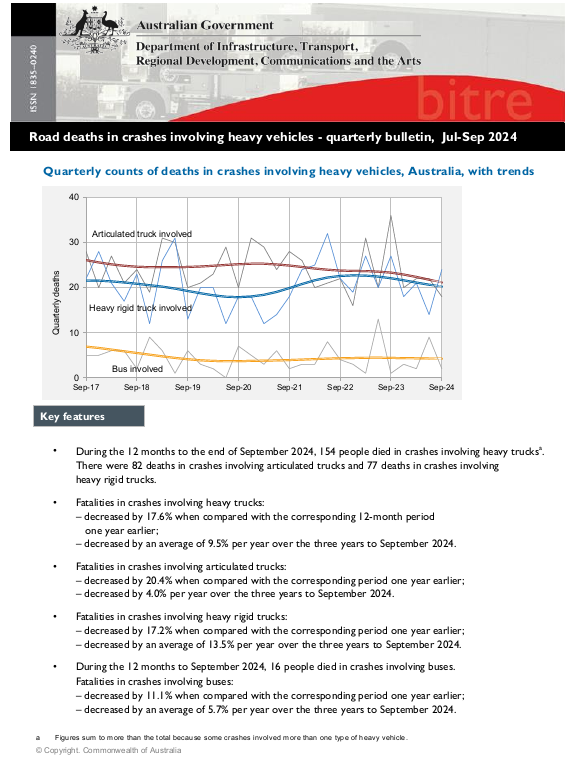
This publication is now being published on the DITRDCSA Data Catalogue and the National Road Safety Data Hub.
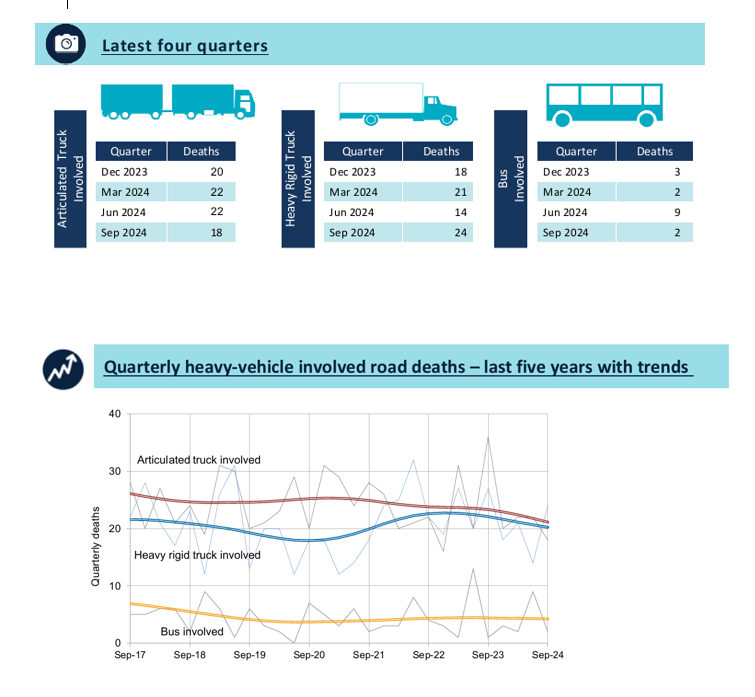
A quarterly publication tracking counts of fatalities in crashes that involve heavy vehicles.
Latest Quarter: Jul-Sep 2024
Archives
Australian sea freight 2011–12
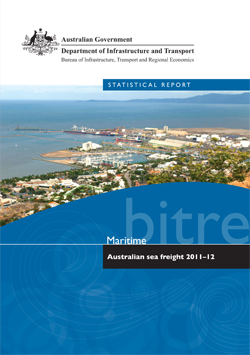
This is the latest in a series of BITRE reports that provide information on Australian sea freight movements, vessel activity, the use of coastal trading licences and the size and composition of the Australian trading fleet. This report contains statistics on maritime freight and shipping activities in Australia from 2005–06 to 2011–12.
Waterline 52—April 2013
This Waterline provides the latest data available on stevedoring productivity and landside performance at Australia's major container ports.
BITRE Road Construction and Maintenance Price Index—2012 update
This publication provides the 2012 update of BITRE's Road Construction and Maintenance Price Index.
- BITRE Road Construction and Maintenance Price Index–2012 update
Waterline 51—November 2012
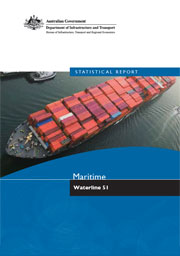
This Waterline provides the latest data available on stevedoring productivity and landside performance. Beginning with this issue, a new wharf side indicator is provided for each port. It measures the average number of crane lifts performed per hour spent in berth by a container ship. Waterline is the main container port performance report referred to in the National Port Strategy.
Australian sea freight 2010–11
This report presents comprehensive statistics on maritime freight in Australia. Compared to past issues that focused on data for the most recent year, this issue contains time series to establish the trend of Australian sea freight statistics over the most recent 10 years from 2001–02 to 2010–11. The information presented comprises international and coastal freight statistics, the use of coastal voyage permits, vessel activity at Australian ports and the size and composition of the Australian trading fleet.