
Avline provides a summary of previously released Aviation related data drawing on a range of sources including BITRE, ABS, Airservices Australian and the US Energy Information Administration. In addition, Avline provides a comparison of published airport charges at the five major capital city airports and at a selection of regional airports. Avline 2009–10 covers the financial year 2009–10 and is the second of the series to be published annually instead of biannually.
- Avline 2009–10
Australian sea freight 2009–10
The Australian Sea Freight series presents statistics on the movement of Australian freight by sea and information on port activity, fleet structure and use of coastal permits. This edition focuses on sea freight activity around Australia during 2009–10.
Waterline 50—November 2011
Waterline 50 reports on trends in container handling productivity on the wharfside and landside of container port terminals in Australia and the cost of importing and exporting containers.
It covers 5 Australian major port terminals: Brisbane, Sydney, Melbourne, Adelaide and Fremantle. This issue provides the data to June quarter 2011.
International airline activity—annual publications
These reports summarise annual (calendar or financial year) international aircraft, passenger, freight and mail movements, flights, available seats, seat load factors and airline market shares. Details are provided for airline, country, city pair and airport.
Related information
Australian aircraft activity
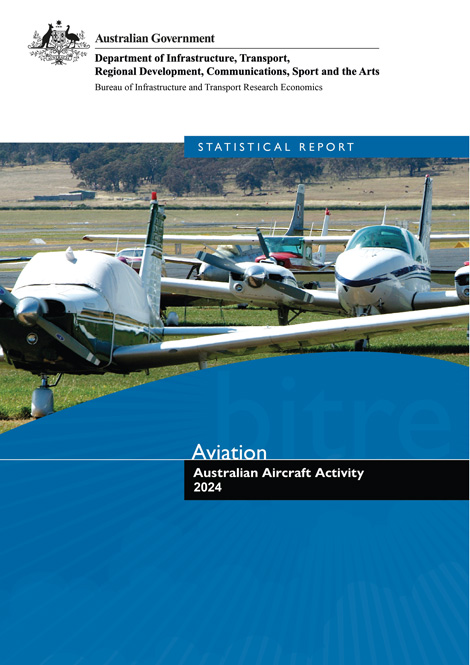
This annual survey covers all Australian registered aircraft used in the commercial air transport and general aviation sectors of the Australian aviation industry. The number of aircraft is provided, hours flown and landings by type of activity and state of operation. Also included are details by power type and type of fuel. Details are provided by age of aircraft and distribution by hours flown. Sport aviation activity as reported by the relevant association is included.
Related information
Australian domestic aviation activity—monthly publications
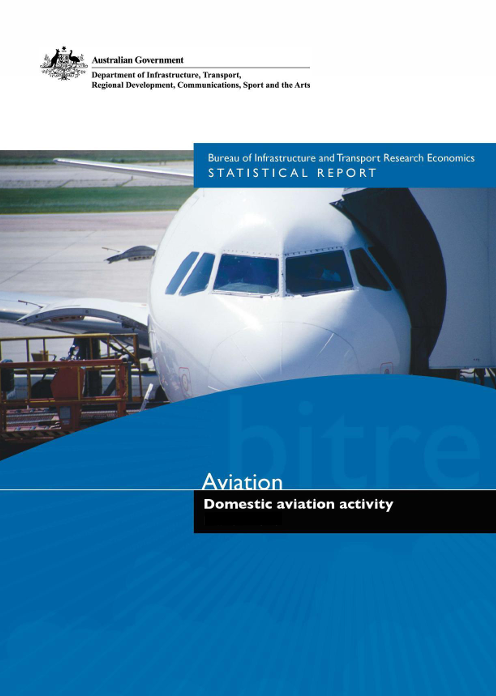
This report covers monthly domestic aircraft (including charter) and passenger movements, available seats, load factors, revenue passenger kilometres and available seat kilometres. Details are provided for the top competitive routes, the top 10 domestic airports in terms of RPT passenger movements, top 5 airports in terms of cargo movements and the top 50 regional airports. Also included are details on charter passengers and aircraft flights where BITRE confidentiality standards are met.
Related information
Airline on-time performance—annual reports
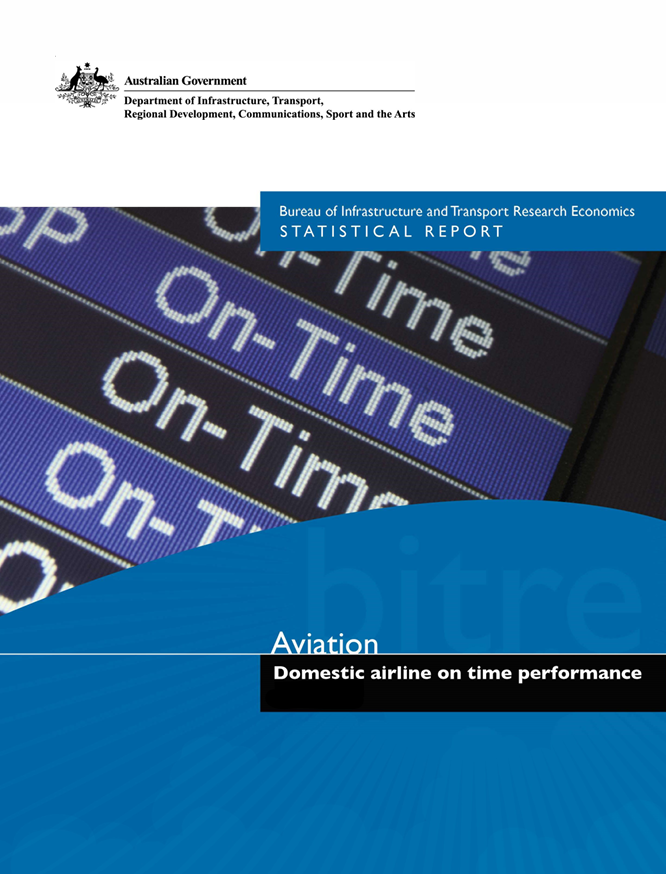
These reports summarise annual (calendar or financial year) punctuality and reliability data of major domestic and regional airlines operating between Australian airports. Details are published for individual airlines on competitive routes and for airports on those routes.
Road Construction Price Indexes 1969–70 to 1980–81
This Report presents input-price indexes for national road construction activity for the period 1969–70 to 1980–81.
- Road Construction Price Indexes 1969–70 to 1980–81
BTE Road Construction Price Indexes 1971–72 to 1981–82
This Information Paper presents input-price indexes for national road construction activity for the period 1971–72 to 1981–82. This is part of a series which commenced in 1969–70.
- BTE Road Construction Price Indexes 1971–72 to 1981–82
BTE Road Construction Price Indexes: 1972–73 to 1982–83
This Information Paper presents input-price indexes for national road construction activity for the period 1972–73 to 1982–83. This is part of a series which commenced in 1969–70.
- BTE Road Construction Price Indexes: 1972–73 to 1982–83