
Bass Strait Passenger Vehicle Equalisation Scheme: Monitoring Report No. 11
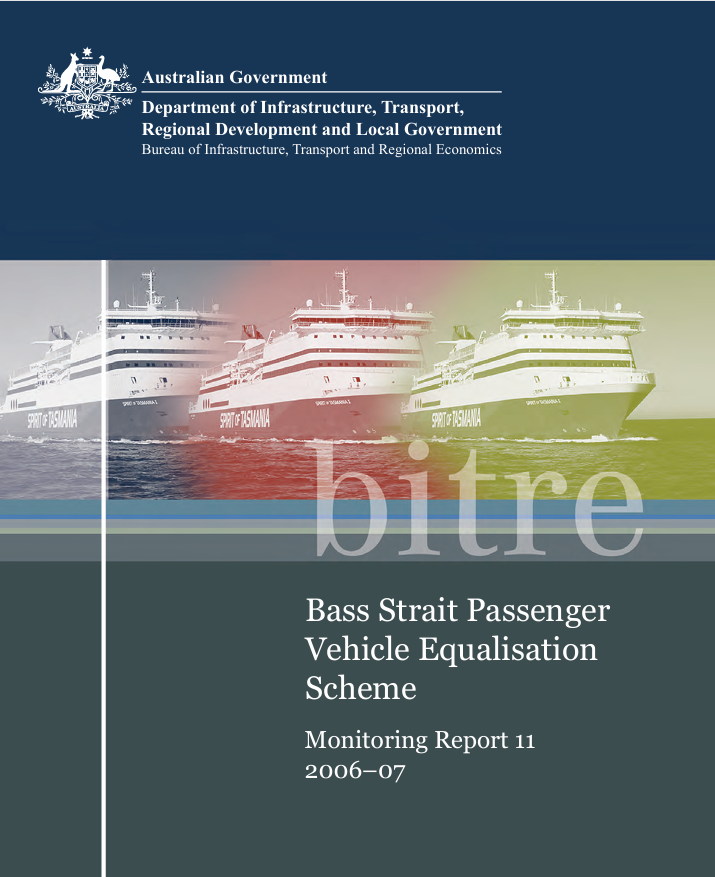
This report presents the results of our eleventh annual review of the Bass Strait Passenger Vehicle Equalisation Scheme. It covers the operation and impact of the Scheme up to (and including) 2006–07.
The feature article examines the changing profile of Australia's aviation links with its largest aviation market, the European Union, and the benefits of a comprehensive air services agreement between the two regions. The number of passengers on Australian international flights has increased to 23.0 million in 2007, up 6.4 per cent on the previous year (page 9). Growth is driven mainly by Australian residents travelling overseas rather than the arrival of international visitors. The number of international flights has also increased by 2.1 per cent to 120 615 (page 10).
- Avline No 12–October 2008
Tasmanian Freight Schemes—Parameter Review 2008
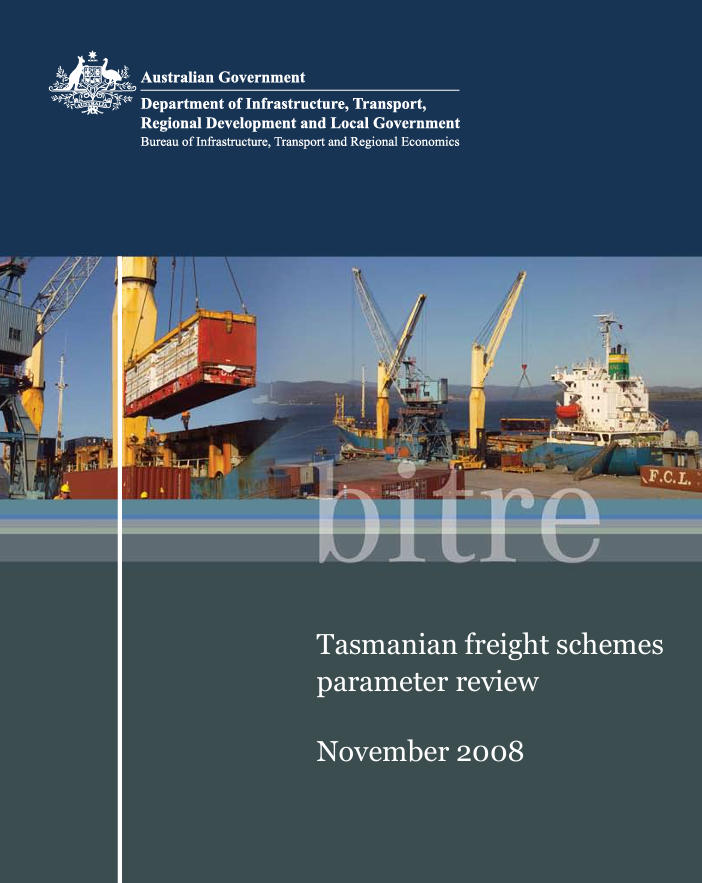
In March 2006 the Productivity Commission was asked to 'report on the merits and weaknesses of the current arrangements for subsidising containerised and bulk shipping between the mainland and Tasmania and provide recommendations on an appropriate future approach and/or arrangements.' This review covered both the Tasmanian Freight Equalisation Scheme and Tasmanian Wheat Freight Scheme.
Tasmanian Freight Schemes—Parameter Review 2011
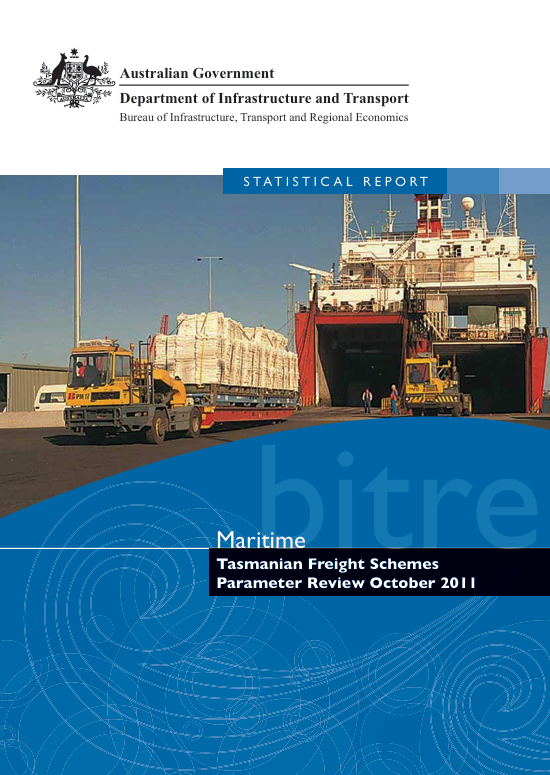
This Bureau of Infrastructure, Transport and Regional Economics report outlines the results of a scheduled review of the parameters underpinning the Tasmanian Freight Equalisation Scheme and Tasmanian Wheat Freight Scheme for the period 1 July 2007 to 30 June 2010. The Tasmanian Freight Equalisation Scheme operates according to Ministerial Directions (2008) using parameters recommended by the TFES Review Authority (1998). The Tasmanian Wheat Freight Scheme operates under separate Ministerial Directions approved on 25 January 2006.
Avline No 13—February 2009
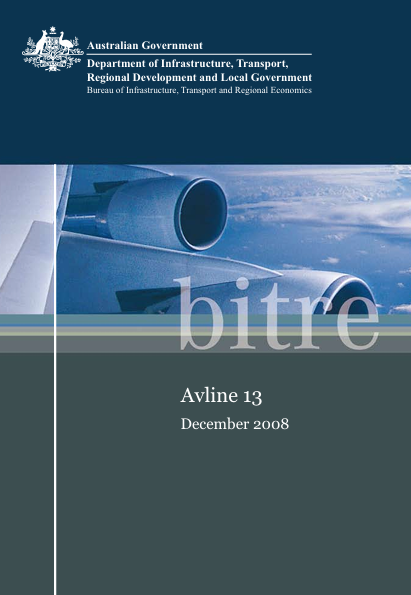
The feature article examines increases in air passenger movements at Australia's capital city airports and nationwide over the past decade (1997–98 to 2007–08) and includes forecasts for future growth up to 2025–26. Total air passenger movements at all Australian airports is expected to increase at an average annual rate of 4.0 per cent and to nearly double by 2025–26.
Regional economic growth database update 2005–06
This update of BITRE's regional economic growth database incorporates new data for the 2005–06 financial year, and brings the database in line with the 2006 ABS Australian Standard Geographical Classification (ASGC) boundaries. The accompanying paper includes some descriptive analysis on economic growth since 2004–05.The database contains more than 25 years of small-area level taxable income data. Changes in a region's total taxable income can be used as an indicator of economic growth. The database also provides data on the number of taxpayers and the average amount earned by each taxpayer in a region.The 2007 update was based on 2001 ASGC boundaries, which may be of use to those seeking data based on this geography. To access the older database and its accompanying maps and analysis, visit Regional economic growth–BITRE's taxable income database.
- Regional economic growth in Australia 2004–05 to 2005–06
- Notes on method: the BITRE's economic growth (taxable income) database, update to 2005–06
- BITRE economic growth database update 2008

Waterline 45—April 2009
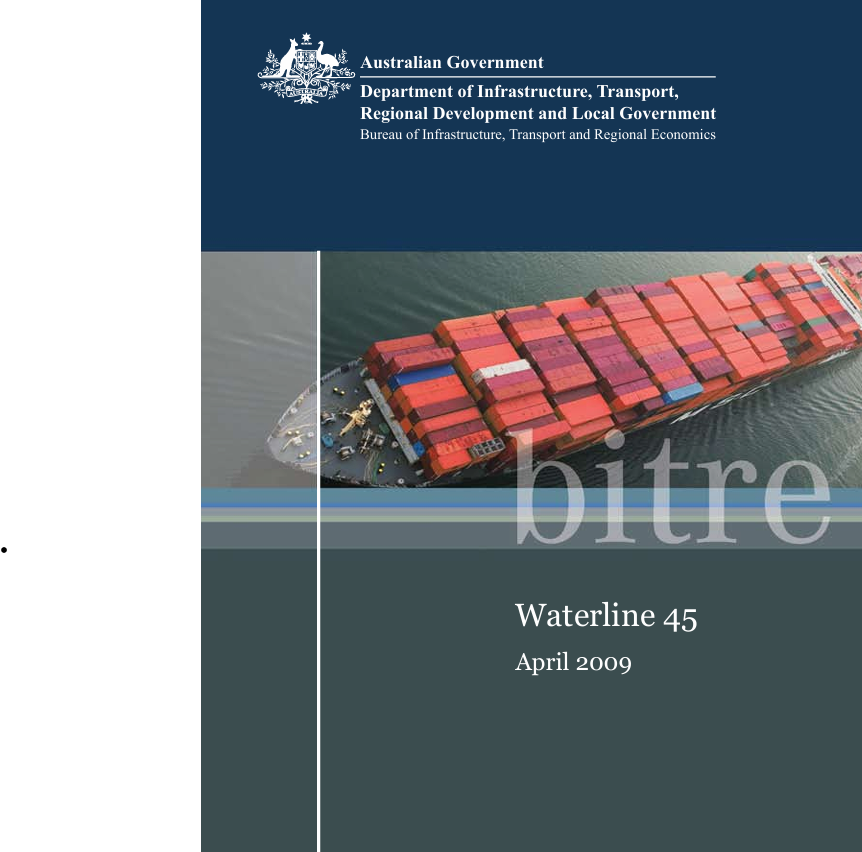
Waterline reports on trends in container handling productivity on the waterfront in Australia as well as the cost of importing and exporting containers. It covers both the unloading of container ships and the transport of containers from container terminals.
Australian sea freight 2007–08
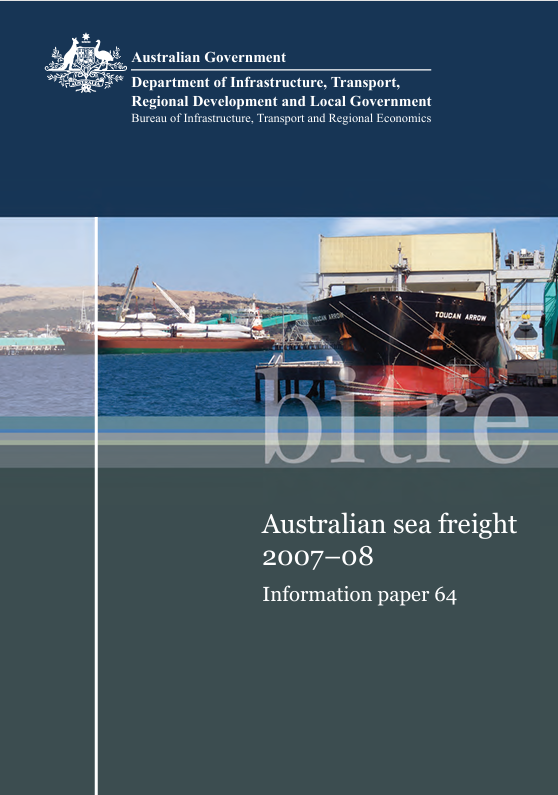
Statistics on the movement of Australian freight by sea, information on port activity, fleet structure and use of coastal permits. This edition focuses on sea freight activity around Australia during 2007–08.
Australian transport statistics Yearbook 2009
Australian Transport Statistics provides a short summary of a diverse range of transport statistics. Topics include employment, GDP, infrastructure expenditure, passenger and freight movements, trade, motor vehicles, fatalities and estimated greenhouse gas emissions attributed to the transport industry. Information is provided for the road, rail, maritime and aviation sectors. Data are gathered from various sources both within BITRE and external organisations.
- Australian transport statistics Yearbook 2009
- Australian transport statistics Yearbook 2009–Spreadsheets

Waterline 46—November 2009
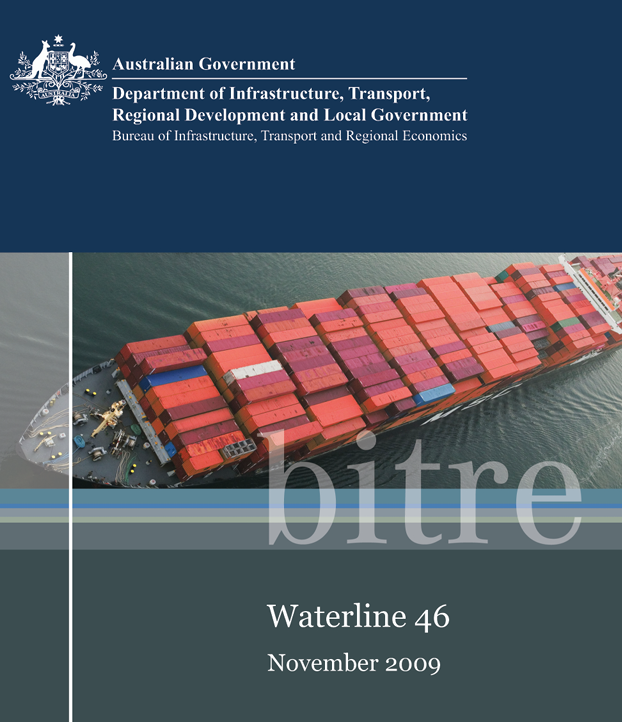
Waterline reports on trends in container handling productivity on the waterfront in Australia and the cost of importing and exporting containers. It covers the unloading of container ships and the transport of containers from container terminals.