
Growth in the Australian Road System
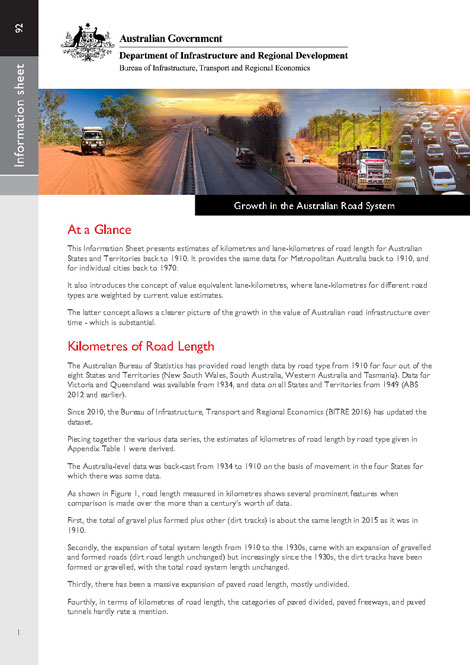
This information sheet presents estimates of Kilometres and lane-kilometres of road length for Australian States and Territories back to 1910. It provides the same data for Metropolitan Australia back to 1910, and for individual cities back to 1970.
It also introduces the concept of value equivalent lane-kilometres, where lane-kilometres for different road types are weighted by current value estimates.
The latter concept allows a clearer picture of the growth in the value of Australian road infrastructure over time–which is substantial.
- Growth in the Australian Road System
Infrastructure and Transport PPPs and Privatisation in Australia
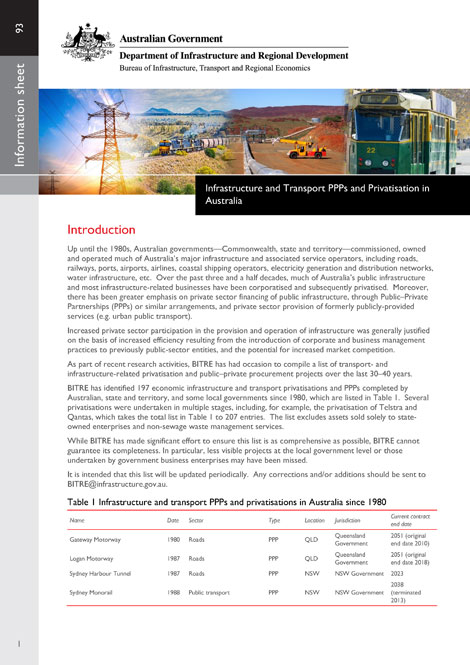
This information sheet provides a list of infrastructure and transport-related Public Private Partnerships and privatisations in Australia since 1980. To the Bureau of Infrastructure Transport and Regional Economics' (BITRE) knowledge, this is the most comprehensive list on the subject to date.
One hundred and ninety seven economic infrastructure assets have been privatised or procured through PPPs since 1980. Several privatisations were undertaken in multiple stages, including, for example, the privatisations of Telstra and Qantas. Including all these stages takes the total list to 207 entries. The list excludes assets sold solely to state-owned enterprises, and non-sewage waste management services.
- Infrastructure and Transport PPPs and Privatisation in Australia
Freight Rates in Australia
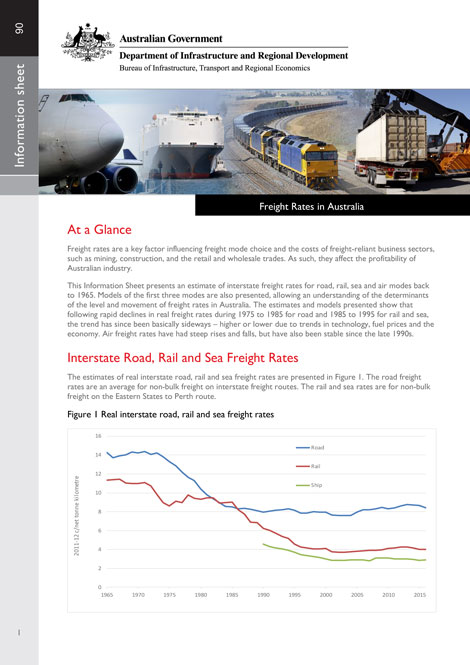
This Information Sheet presents an estimate of interstate freight rates for road, rail, sea and air modes back to 1965. Models of the first three modes are also presented, allowing an understanding of the determinants of the level and movement of freight rates in Australia.
The estimates and models presented show that following rapid declines in real freight rates during 1975 to 1985 for road and 1985 to 1995 for rail and sea, the trend has since been basically sideways–higher or lower due to trends in technology, fuel prices and the economy.
- Freight Rates in Australia
Waterline 59—May 2017
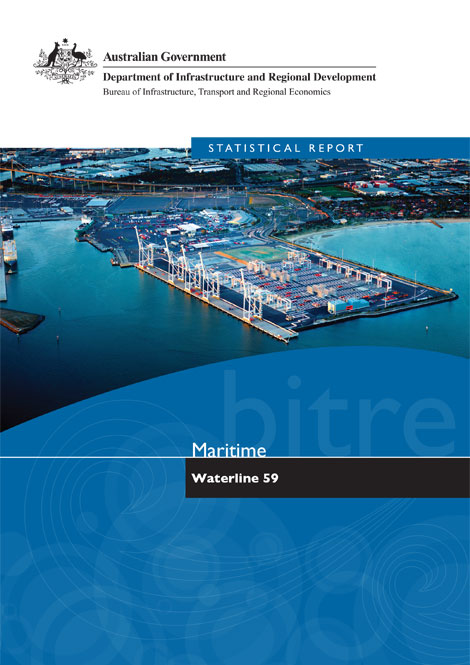
Waterline reports on trends in throughput, container handling productivity on the waterfront and landside of ports in Australia, and the cost of importing and exporting containers via 5 container ports. It covers the loading and unloading of container ships and the transport of containers from container terminals. This issue covers port terminal activity up to the June quarter 2016.
Australian sea freight 2014–15
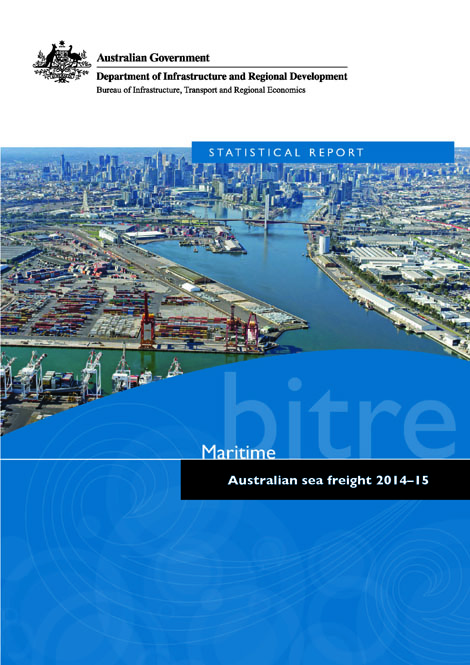
This is the latest in a series of BITRE reports that provide information on Australian sea freight movements, vessel activity, the use of coastal trading licences and the size and composition of the Australian trading fleet. This report contains statistics on maritime freight and shipping activities in Australia from 2005–06 to 2014–15.
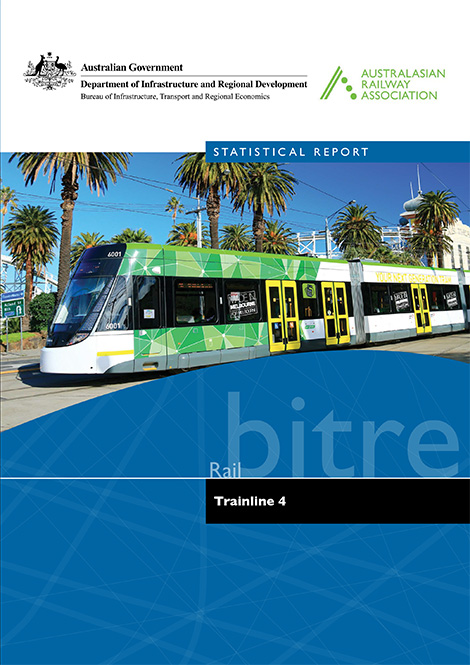
Trainline is a compendium of Australia's railways providing insights, analysis, and an understanding of the railway industry. Australia's railways are evolving via changes within and outside the industry. These changes include logistics, commodity flows, technology, urban patronage and regional passenger services. The publication presents an overview and data on railway transport tasks performed, characteristics of the railways and train operators' rolling stock that runs and aspects of railway performance including safety, environment and reliability.
Waterline 58—November 2016
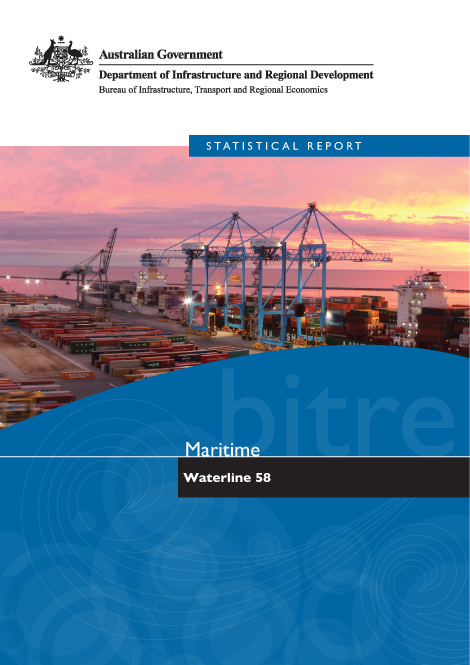
Waterline reports on trends in throughput, container handling productivity and the cost of importing and exporting containers through Australia's 5 major container ports. It covers container exchange with specialised container ships and transport of containers on the landside of the ports.
This issue covers port terminal activity up to the December quarter 2015.
Freightline 4—Australian coal freight transport
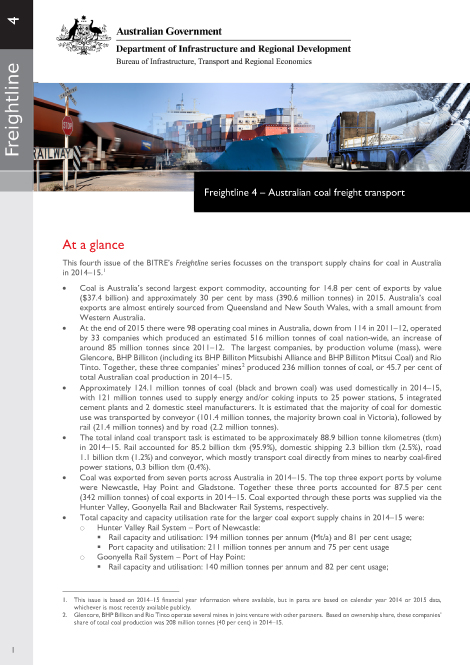
The Freightline series is intended to provide information on interregional freight movements across Australia, filling a major gap in Australian transport-related data and information, to help better inform and support policy development and infrastructure planning. The Freightline series begins with a broad overview of the freight task, followed by separate commodity-specific issues that provide more detailed information about the size and location of major freight movements, supply chain composition and key infrastructure components. Freightline 4 (this issue) focusses on Australian coal transport supply chains and freight movements in 2014–15.
- Freightline 4–Australian coal freight transport
Traffic on the national road network, 2013–14
This Information Sheet presents 2013–14 road traffic volumes across the Australian National Land Transport Network (NLTN)–the integrated network of land transport linkages of strategic national importance. It is an update on estimates presented for 2011–12 in BITRE Information Sheet 63.
- Traffic on the national road network, 2013–14
Australian road freight estimates: 2016 update
The Information Sheet provides revised estimates of road freight by State, capital city and rest-of-state. The long-term trend in growth has been substantial, interrupted only by the 1990 recession and the Global Financial Crisis.
- Australian road freight estimates: 2016 update