
The economics of road maintenance
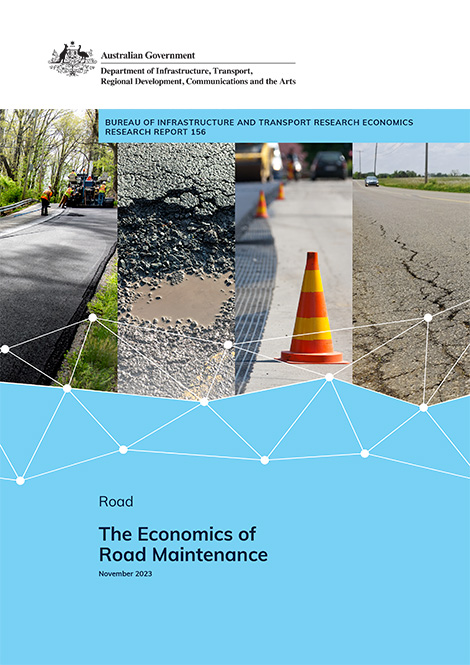
This report discusses the economics of road maintenance. It develops analytical approaches to help ensure that road expenditure is used in the most efficient and cost-effective manner both in terms of dividing funds between construction and maintenance and allocation of maintenance funds between locations, treatment types and treatment timing. The focus is on the impact of timely and adequate maintenance expenditure on the overall costs to society — that is, costs to road agencies, road users and externalities. The analytical approach and case studies demonstrate the potential costs of delayed or deferred maintenance expenditure, which can result in much higher overall costs, reinforcing the adage: ‘a stitch in time save nine’. The report also provides a computer modelling approach to optimising road maintenance expenditure over time so as to minimise the overall cost to society, without and with constraints on road agency spending levels.
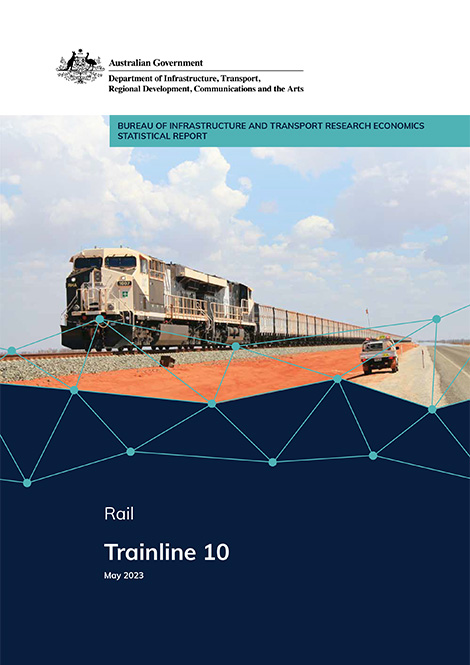
Trainline is a compendium of Australia's railways that provides insights, analysis and an understanding of the railway industry. Australia's railways are evolving, with changes within and outside the industry. These changes include logistics, commodity flows, technology, urban patronage, and regional passenger services. The publication presents an overview and data on railway transport tasks performed; characteristics of the railways and train operators' rolling stock that runs; and aspects of railway performance, including safety, environment and reliability.
Australian Infrastructure and Transport Statistics—Yearbook 2022
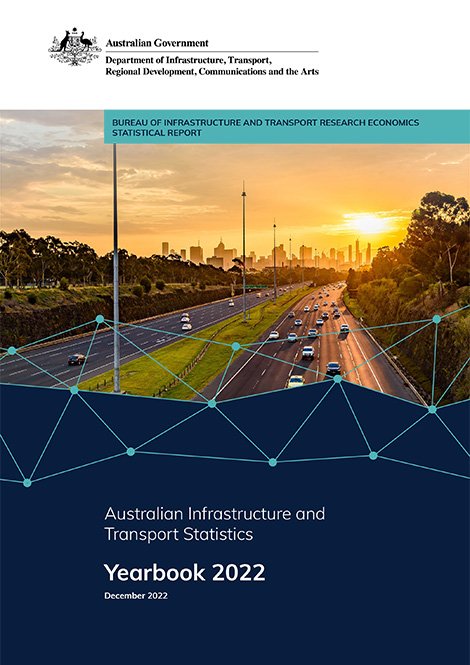
The aim of the Australian Infrastructure Statistics and Transport Yearbook is to provide a single, comprehensive annual source of infrastructure statistics for use by policymakers, industry leaders, transport analysts and the wider Australian community.
The publication is primarily a source of long-term, aggregate time series infrastructure statistics. Most statistics included in the publication are currently collected by BITRE or other Australian, state or territory government agencies.
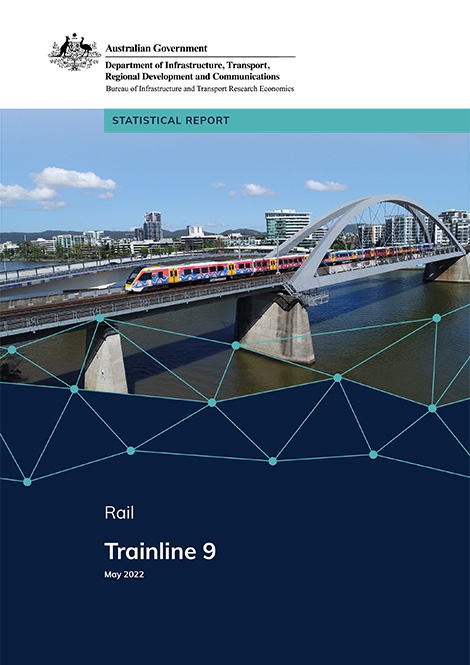
Trainline is a compendium of Australia's railways, providing insights, analysis and an understanding of the railway industry. Australia's railways are evolving, with changes within and outside the industry. These changes include logistics, commodity flows, technology, urban patronage and regional passenger services. The publication presents an overview and data on railway transport tasks performed; characteristics of the railways and train operators' rolling stock that runs; and aspects of railway performance including safety, environment and reliability.
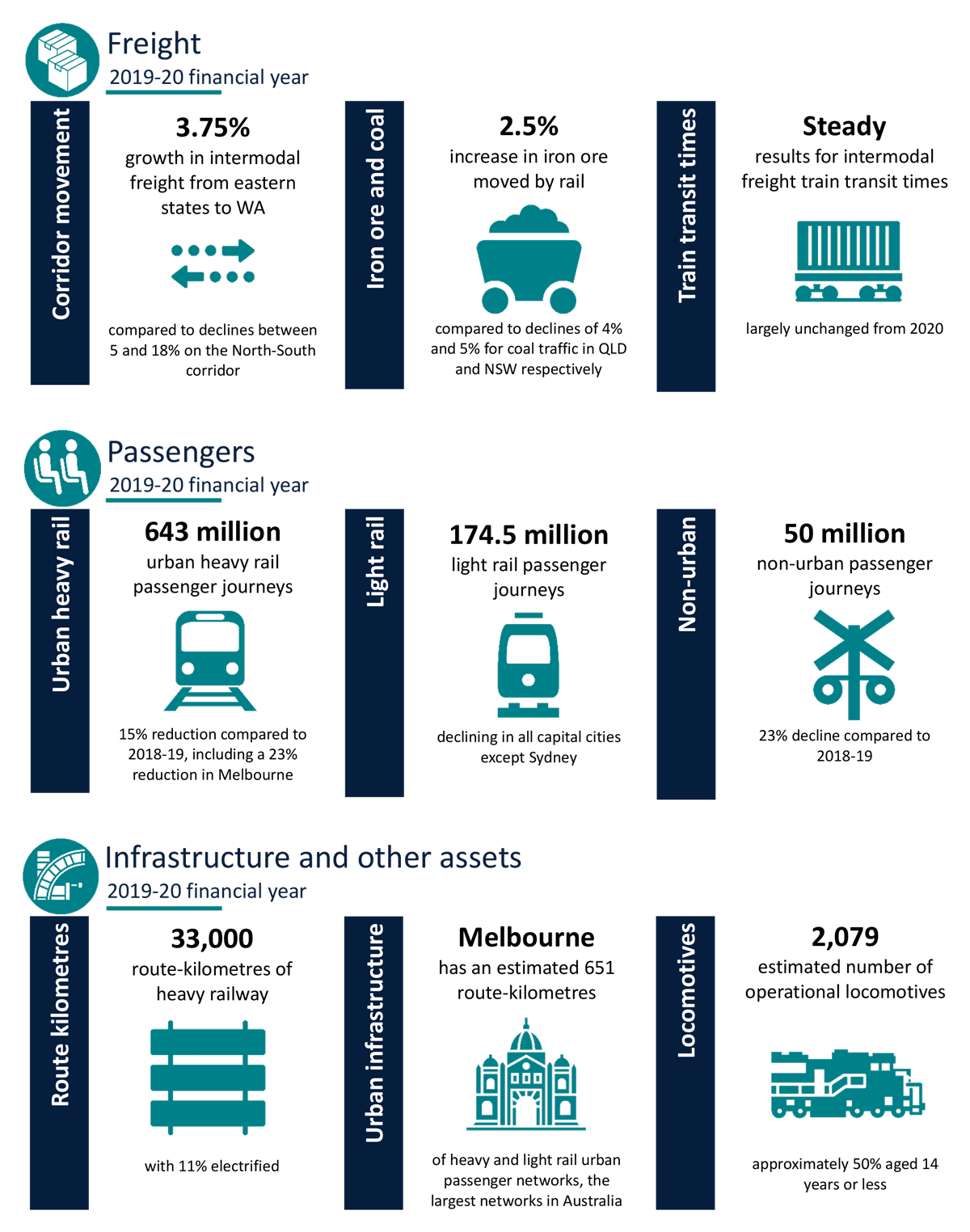
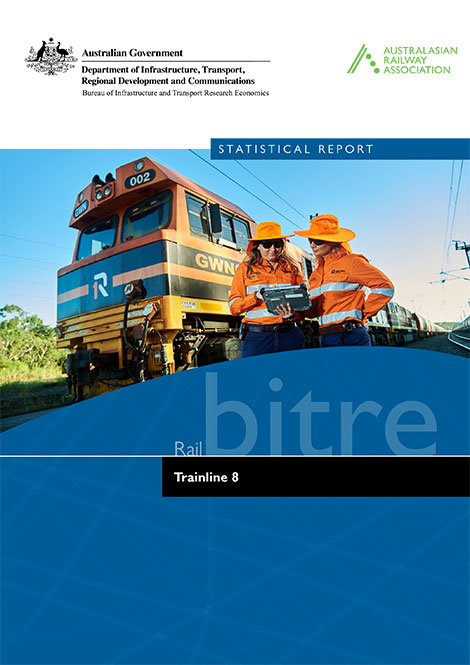
Trainline is a compendium of Australia's railways, providing insights, analysis and an understanding of the railway industry. Australia's railways are evolving via changes within and outside the industry. These changes include logistics, commodity flows, technology, urban patronage and regional passenger services. The publication presents an overview and data on railway transport tasks performed; characteristics of the railways and train operators' rolling stock that runs; and aspects of railway performance including safety, environment and reliability.
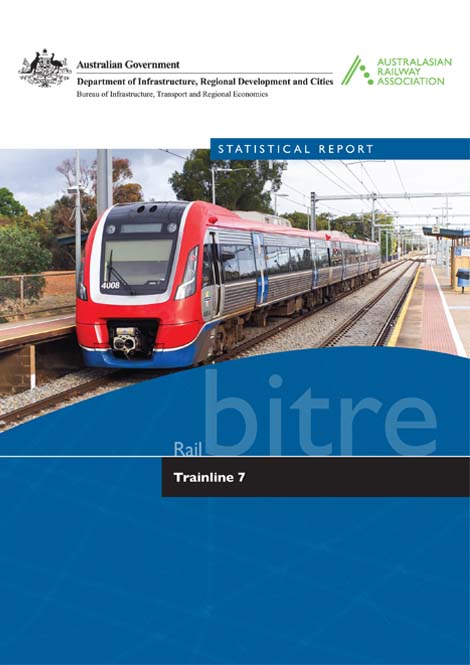
Trainline is a compendium of Australia's railways providing insights, analysis and an understanding of the railway industry. Australia's railways are evolving via changes within and outside the industry. These changes include logistics, commodity flows, technology, urban patronage and regional passenger services. The publication presents an overview and data on railway transport tasks performed; characteristics of the railways and train operators' rolling stock that runs; and aspects of railway performance including safety, environment and reliability.
National profile of Transport, postal and warehousing workers in 2016
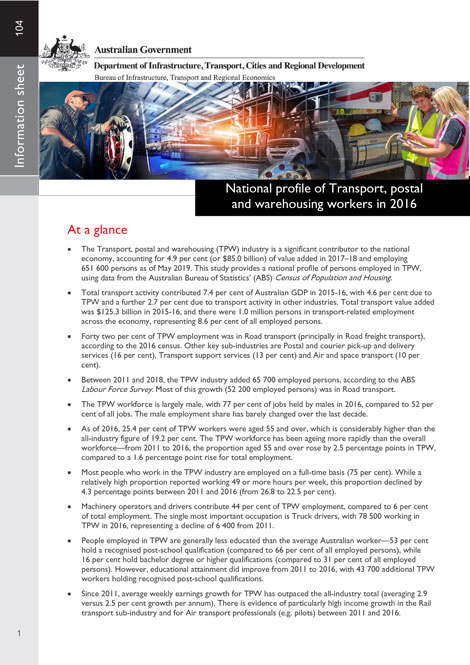
This information sheet is an update of BITRE's previous study on the same subject (BITRE Information Sheet 54) which used ABS 2011 census data. This study used ABS 2016 census data and provides details of the sub-industries in which TPW workers are employed, their employment status, hours worked, gender, age, occupation, educational qualifications, income, work location and commuting behaviour. It also describes some of the key changes that have occurred since 2011, such as the ageing and upskilling of the TPW workforce.
- National profile of Transport, postal and warehousing workers in 2016 [PDF: 863 KB]
National profile of Heavy and civil engineering construction workers in 2016
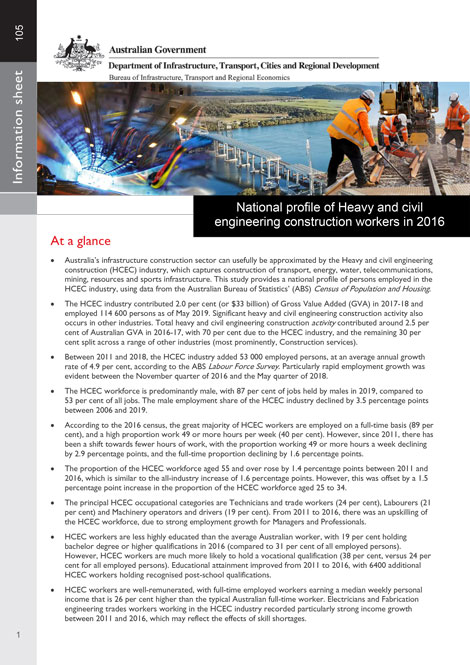
This study explores details of the sub-industries in which HCEC workers are employed, their employment status, hours worked, gender, age, occupation, educational qualifications, income, work location and commuting behaviour. It also describes some of the key changes that have occurred since 2011, including the changing gender mix and the upskilling of the HCEC workforce.
- National profile of Heavy and civil engineering construction workers in 2016
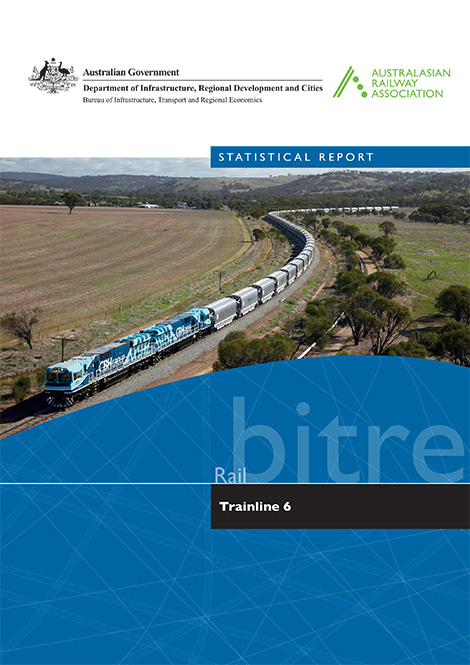
Trainline is a compendium of Australia's railways, providing insights, analysis and an understanding of the railway industry. Australia's railways are evolving via changes within and outside the industry. These changes include logistics, commodity flows, technology, urban patronage and regional passenger services. The publication presents an overview and data on railway transport tasks performed, characteristics of the railways and train operators' rolling stock that runs and aspects of railway performance including safety, environment and reliability.
Road construction cost and infrastructure procurement benchmarking: 2017 update
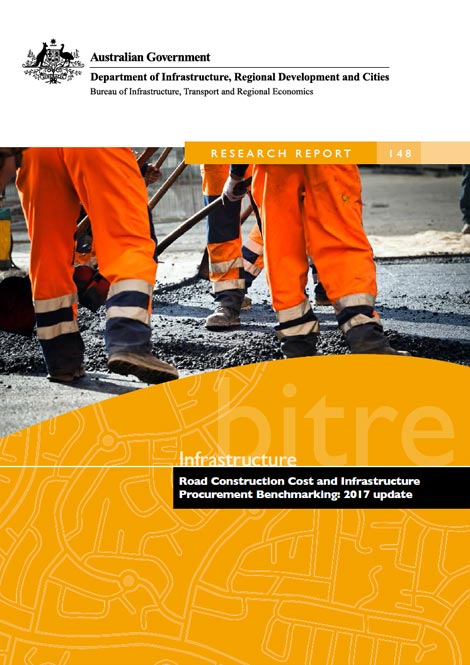
This report benchmarks the costs of road construction and the timeliness of infrastructure procurement processes for projects undertaken by states and territories since 2015. BITRE undertook the analysis under the guidance of the Infrastructure Working Group of the Transport and Infrastructure Council. Road construction costs include total project costs and key cost components such as construction and project management. The procurement timeliness benchmarks cover all stages of procurement from the initial notice of the project to financial completion. This report is an update of the Transport and Infrastructure Council's 2015 Infrastructure Benchmarking Report and contributes to the goal of improving value for money in infrastructure investment.
- Road construction cost and infrastructure procurement benchmarking: 2017 update