

Data on the latest national and state/territory road deaths and fatal crashes can be found on the National Road Safety Data Hub website.
Quarterly heavy vehicle road deaths
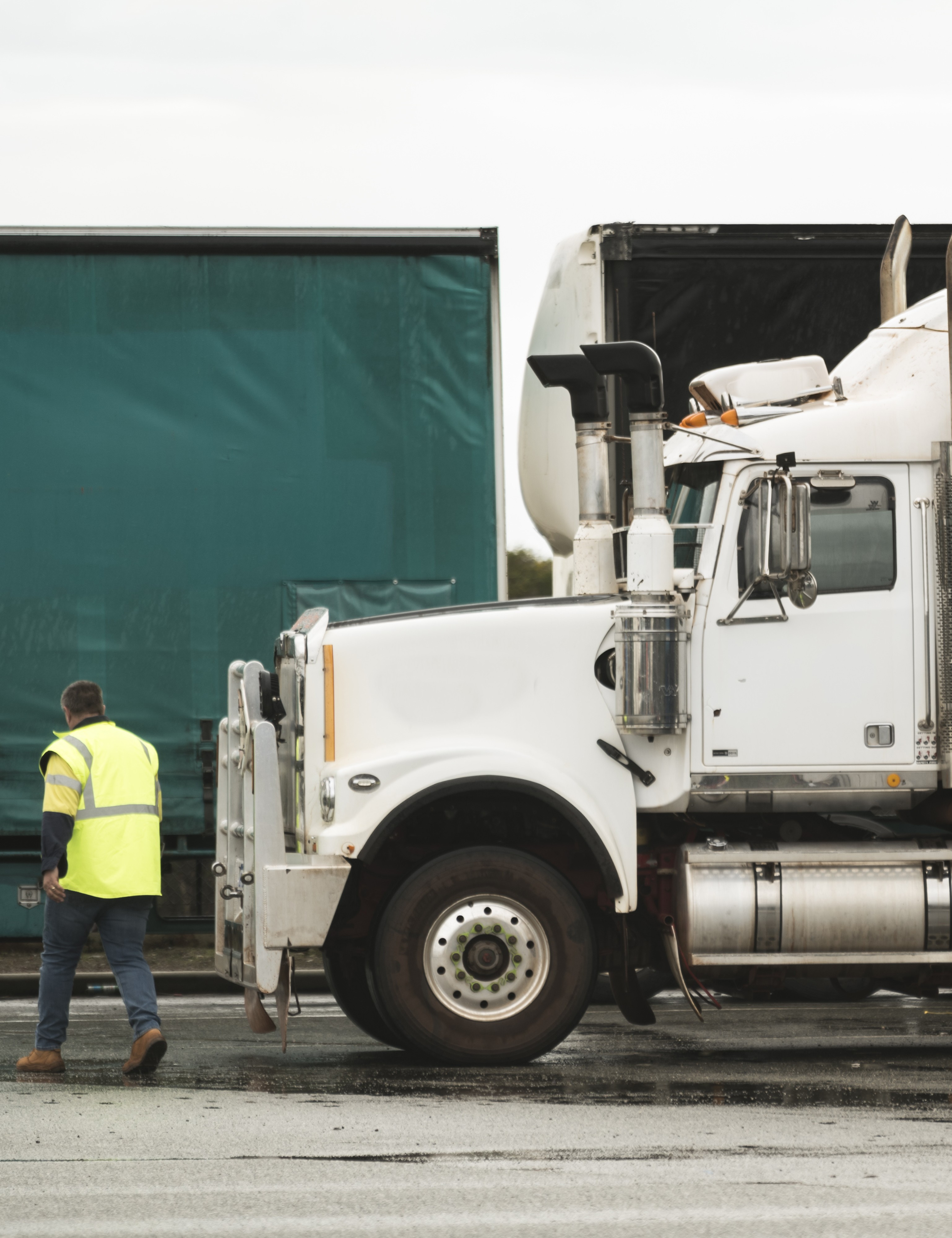
Explore up-to-date data tracking counts of fatalities in crashes involving heavy vehicles on the National Road Safety Data Hub.

Explore annual data on Australian road deaths from 2008 as reported by state and territory transport authorities. You can use the dashboard to explore data under 5 themes: overview, roads, road users, vehicles and fatality rates.
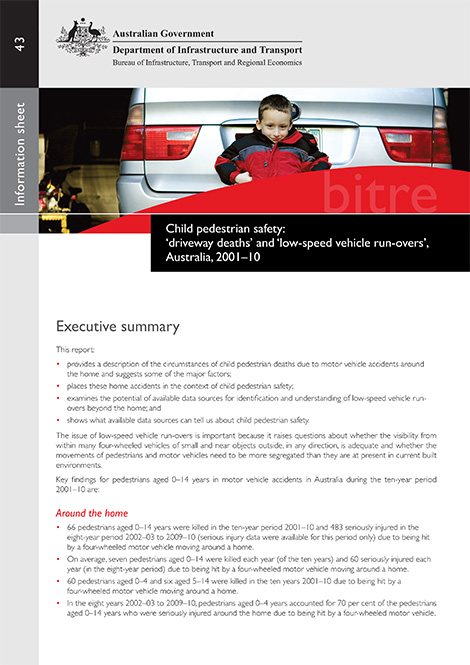
Child pedestrian safety: ‘driveway deaths’ and ‘low-speed vehicle run-overs’, Australia, 2001–10
First Nations Peoples road deaths
The excel tables present annual road deaths, population and road death rates per 100,000 population from 2012 to 2021 by state and territory (where data is available), by Indigenous status. The excel tables include road deaths and road death rates per 100,000 population for First Nations Peoples by age group, sex, road user, remoteness area and vehicle type. Additional tables for First Nations Peoples population are available by state and territory and age group and sex.
Road vehicle entry and recall statistics
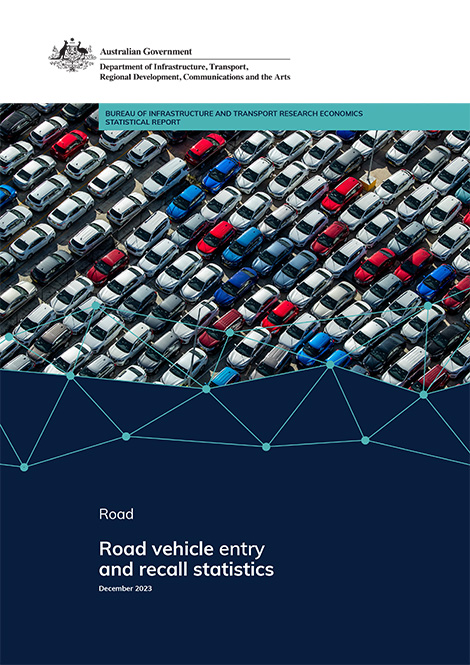
Monthly statistics on road vehicles being provided to the Australian market, road vehicle recall notices and other road vehicle-related regulatory activities governed under the Road Vehicle Standards Act 2018 (RVSA).
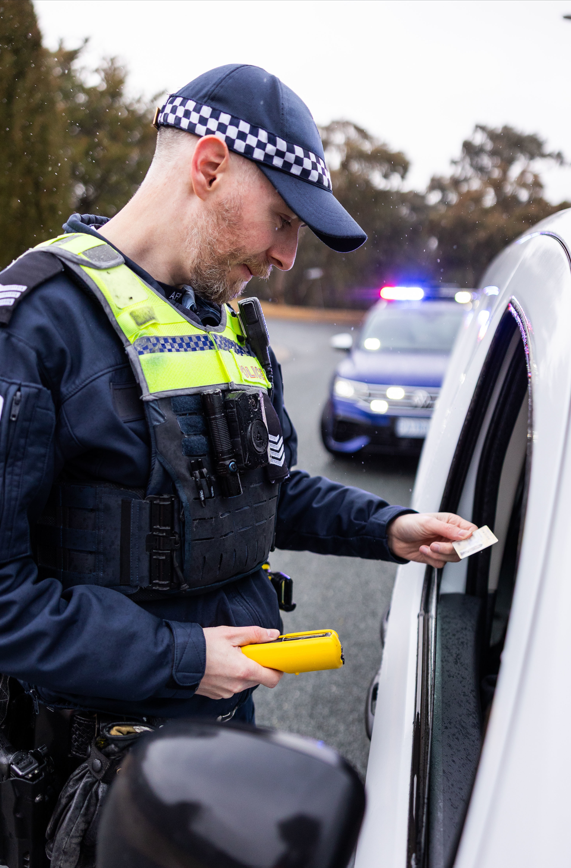
Data on road safety enforcement activities can be found on the National Road Safety Data Hub website.
The data provides information on road safety enforcement activities undertaken across Australian states and territories from 2008, including:
- unlicensed driving
- random roadside alcohol breath tests
- roadside drug tests
- speeding infringements
- mobile phone use while driving infringements
- seatbelt infringements
The series is collated from data collected by multiple organisations with varied definitions and data collection practices are not fully consistent across states and territories. Please see the data dictionary and the dashboard for more information.
BITRE is working with data owners to introduce more consistent definitions, address data gaps and investigate opportunities to streamline data collection and sharing processes. This will improve the value of this data series for policymakers, including for reporting on progress on the National Road Safety Strategy 2021-30 and National Road Safety Action Plan 2023-25.
Social Cost of Road Crashes
Updated content: this report replaces the version uploaded on Friday 14 October. Text and chart changes have been made to the report’s section on age.
The Australian National University (ANU) was engaged by the Bureau of Infrastructure and Transport Research Economics (BITRE) to develop a model to estimate the social cost of road crashes in Australia. The current study replicates and extends the previous BITRE costing study (BITRE, 2009) by using current data, improved methods and broader scope of analysis, including analysis of who bears the burden of road crashes. The current study also set out to aid in addressing three policy questions posed by BITRE by drawing on results of the costing study as well as a rapid review of relevant literature.
The ANU research team members include Emily Lancsar, Ralf Steinhauser, Siobhan Bourke, Robert Breunig, Russell Gruen, Leo Dobes, Liza Munira, Liliana Bulfone, Kathryn Glass, Cameron Gordon, and Jolene Cox.
The BITRE team was Tim Risbey and Dr Gary Dolman, with key contributions from Dr Mark Harvey, Leo Soames and Simon O'Mahony, and Neil Thompson from the Office of Road Safety.
BITRE greatly appreciated the assistance of stakeholders who provided data, participated in the two project workshops, and provided comments on the draft report.
Run-off road crashes in Australia, 2016-2020
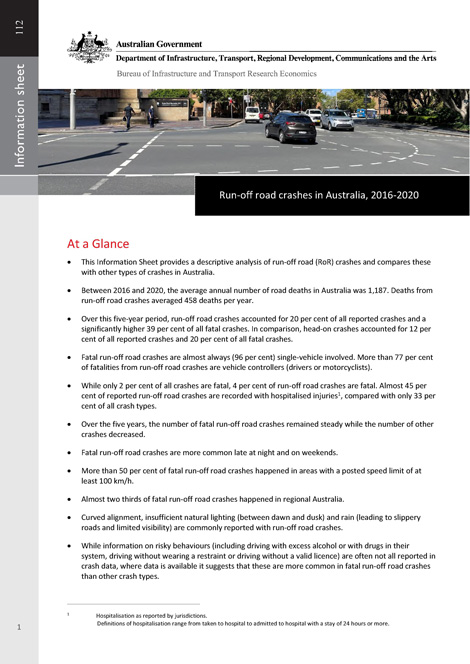
This Information Sheet provides descriptive analysis of run-off road (RoR) crashes and compares these with other types of crashes in Australia. Between 2016 to 2020, the average annual number of road deaths in Australia was 1,187. Deaths from run-off road crashes averaged 458 deaths per year. Run-off road crashes accounted for 20 per cent of all crashes and a significantly higher 39 per cent of all fatal crashes in Australia during the five-year period 2016 to 2020. Run-off road crashes form an important focus area in not only reducing total numbers of crashes but also the severity level of crashes.
Archived Road Trauma Involving Heavy Vehicles—Annual Summaries
-
2020
-
2019
- 2018
- 2017
- 2016
- 2015
- 2014
- 2013