
Road freight estimates and forecasts in Australia: interstate, capital cities and rest of state
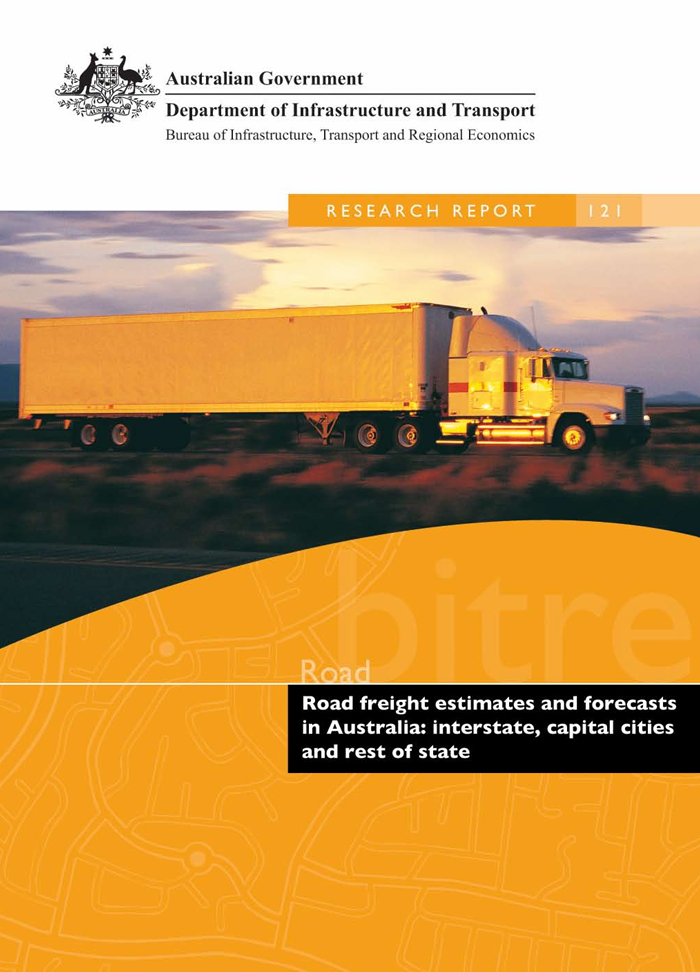
In Australia, road transport is the predominant mode for moving freight within the country, especially interstate and within capital cities. It represents a vital link in various logistics chains, providing access for freight to ports and terminals and urban freight distribution between warehouses and retail outlets. It is also the dominant mode for moving freight over relatively short distances and where alternatives are not readily available.
Australian infrastructure statistics—Yearbook 2011
The Australian Infrastructure Statistics Yearbook 2011 provides a single comprehensive source of Australian infrastructure statistics time series statistics for measures of transport, energy, communications and water infrastructure and the use of this infrastructure in Australia.
- Australian Infrastructure Statistics Yearbook 2011
- Australian Infrastructure Statistics Yearbook 2011 Tables
- Australian Infrastructure Statistics Yearbook 2011
Part I–Infrastructure and the Economy

- Australian Infrastructure Statistics Yearbook 2011
Part T–Transport
- Australian Infrastructure Statistics Yearbook 2011
Part E–Energy
- Australian Infrastructure Statistics Yearbook 2011
Part C–Communication
- Australian Infrastructure Statistics Yearbook 2011
Part W–Water
Waterline 49—July 2011
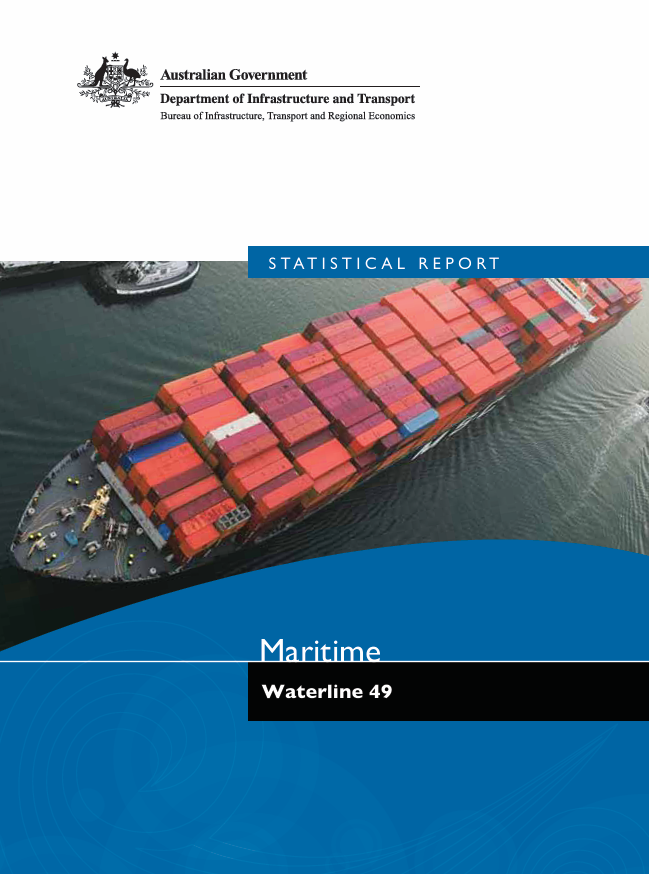
Waterline reports on trends in container handling productivity on the waterfront in Australia and the cost of importing and exporting containers. It covers the unloading of container ships and the transport of containers from container terminals.
Truck productivity: sources, trends and future prospects
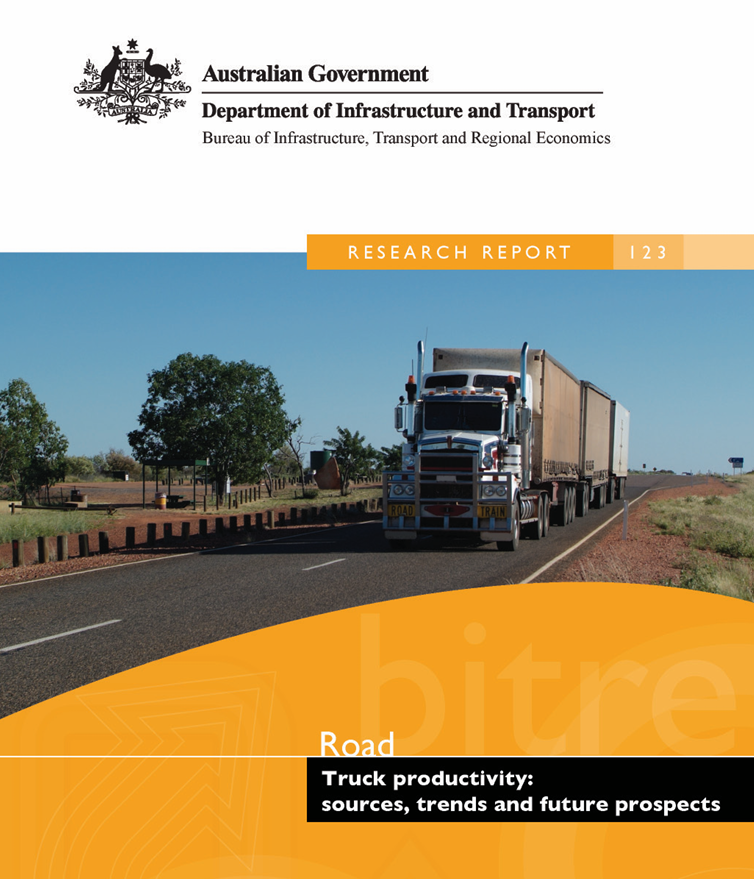
Analysis of the impact of past heavy vehicle reforms on truck productivity and projected future productivity trends.
Australian sea freight 2009–10
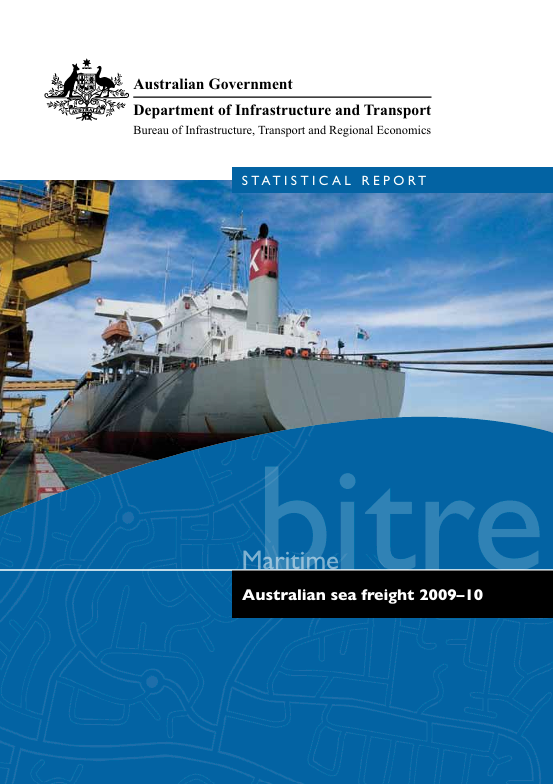
The Australian Sea Freight series presents statistics on the movement of Australian freight by sea and information on port activity, fleet structure and use of coastal permits. This edition focuses on sea freight activity around Australia during 2009–10.
Waterline 50—November 2011
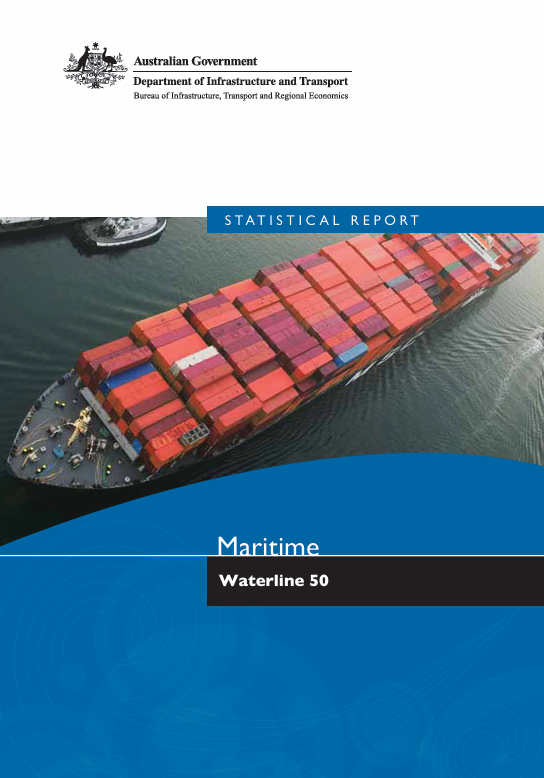
Waterline 50 reports on trends in container handling productivity on the wharfside and landside of container port terminals in Australia and the cost of importing and exporting containers.
It covers 5 Australian major port terminals: Brisbane, Sydney, Melbourne, Adelaide and Fremantle. This issue provides the data to June quarter 2011.
Australian rail freight performance indicators 2005–06
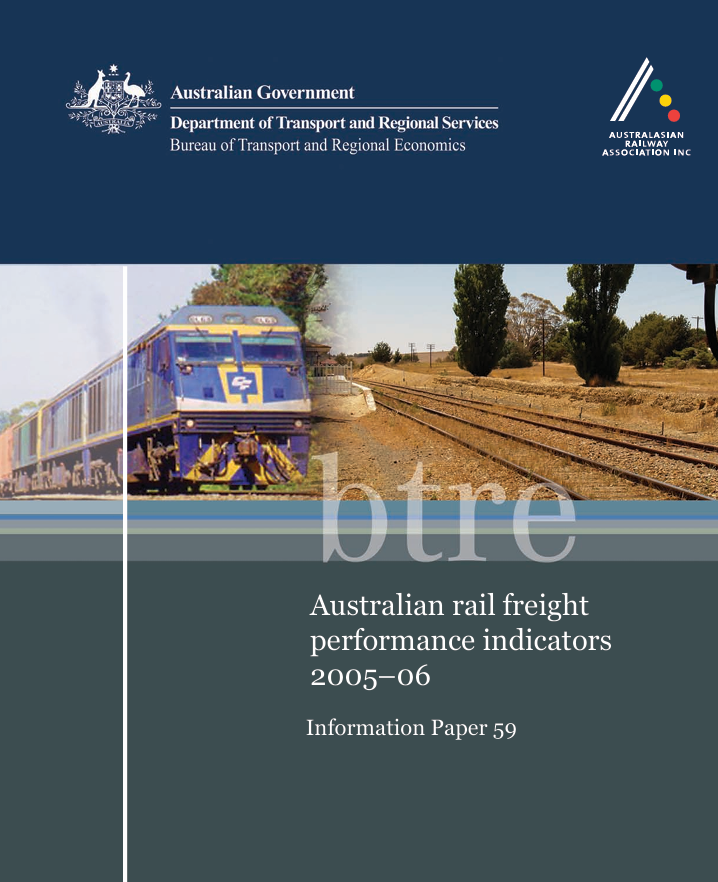
In 2002, the ATC approved a set of 6 targets and indicators to measure performance improvements of the interstate rail track over time. Early reports against the indicators were derived entirely from track managers' (below rail) datasets. An ARA survey of train operators (above rail) reporting on key performance indicators showed that results from track managers' datasets were, for some indicators, inconsistent with results based on rail operators' data. There are distinct reporting methodologies between above and below rail.
Australian intercapital rail freight performance indicators 2006–07
Results for 2006–07 are reported against a set of 11 railway indicators. These are in three groups: three train indicators, four track indicators and four market indicators.
- Australian intercapital rail freight performance indicators 2006–07
Rail Freight Performance Indicators 2007–08

This statistical report is the third in this series and is a result of collaboration between the Australasian Railway Association (ARA) and the Bureau of Infrastructure, Transport and Regional Economics (BITRE).
- Rail Freight Performance Indicators 2007–08
Australian maritime activity to 2029–30
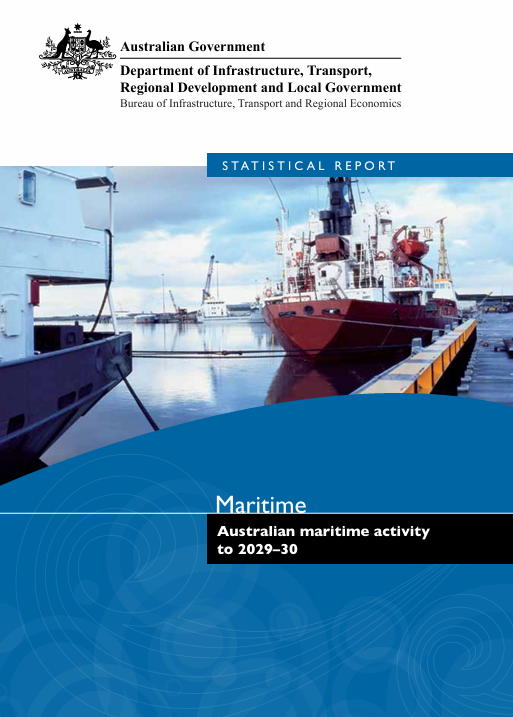
This report presents forecasts of maritime activity in Australian ports to 2029–30. This includes imports and exports of containerised and non-containerised freight, coastal freight movements, temporary arrivals and departures of passengers by sea, and vessel activity.